The Hidden Moisture Problem Most Screen Printers Never Consider
Every winter, the same thing happens.
The hoodie orders start rolling in.
- Workwear
- Sports clubs
- Schools
- Corporate apparel
And somewhere during the season, many screen printers experience something strange.
A job that should print perfectly suddenly feels different.
The flash feels slower.
The garments seem colder.
The prints don’t behave quite the same way they did a few months ago.
Most printers start troubleshooting:
- The ink
- The mesh
- The flash unit
- The dryer
But the real culprit may be sitting right in front of them.
The garment.
Your Hoodie Is Absorbing Moisture From The Air
Fabric is not a static material.
It constantly exchanges moisture with its environment.
During Melbourne’s colder months:
- Humidity increases
- Temperatures drop
- Ventilation decreases
- Garments spend more time in warehouses and storage
As a result, hoodies absorb moisture from the surrounding air.
This is especially true for:
- Cotton
- Cotton/poly blends
- Fleece-lined garments
- Heavyweight hoodies
The garment can feel completely normal. But internally, its moisture content may be significantly higher than it was during summer.
Why Moisture Affects Screen Printing
Water requires energy to evaporate.
That sounds obvious.
But many printers forget that the moisture inside the garment becomes part of the curing equation.
Before the ink can properly cure:
👉 The moisture needs to leave the garment.
This means your flash unit and conveyor dryer are effectively doing two jobs:
- Removing moisture
- Curing ink
That additional workload can create several production problems.
Slower Flashing
One of the first things printers notice is inconsistent flashing.
The garment absorbs heat energy.
The moisture absorbs heat energy.
Less heat reaches the ink film.
The result:
- Slower flash times
- Inconsistent gel points
- Varying print feel between garments
This often shows up on heavier fleece garments.
Longer Cure Times
The same principle applies inside the dryer.
A garment carrying additional moisture requires more energy before the ink reaches cure temperature.
This becomes especially important when printing:
- Hoodies
- Heavyweight workwear
- Fleece garments
- Layered prints
A dryer setting that worked perfectly in autumn may no longer produce the same result in winter.
Dye Migration Can Become Less Predictable
Polyester and poly-blend hoodies already present dye migration challenges.
Moisture introduces another variable.
As drying behaviour changes, so does the thermal profile of the garment.
That can affect:
- Flash temperatures
- Dwell times
- Overall heat exposure
Which means jobs that normally behave predictably can become more variable.
Dye Migration Can Become Less Predictable
Polyester and poly-blend hoodies already present dye migration challenges.
Moisture introduces another variable.
As drying behaviour changes, so does the thermal profile of the garment.
That can affect:
- Flash temperatures
- Dwell times
- Overall heat exposure
Which means jobs that normally behave predictably can become more variable.
The Hidden Production Cost
The biggest problem is that most printers don’t realise moisture is involved.
Instead, they start chasing symptoms.
They:
- Increase flash time
- Increase dryer temperature
- Change squeegee pressure
- Modify production settings
When the real issue is environmental.
How To Reduce Moisture-Related Issues
The good news is that moisture can be managed.
Store Garments Properly
Avoid:
- Damp storage areas
- Cold warehouses
- Concrete floors
Garments stored in poor conditions absorb more moisture.
Pre-Condition Garments
Allow garments to acclimatise inside the print room before production.
This helps stabilise temperature and moisture content.
Improve Airflow
Air movement helps reduce ambient moisture.
Even simple improvements in ventilation can help.
Monitor Curing More Closely
Winter is when curing consistency becomes most important.
Especially on:
- Hoodies
- Fleece garments
- Polyester blends
Pre-Dry
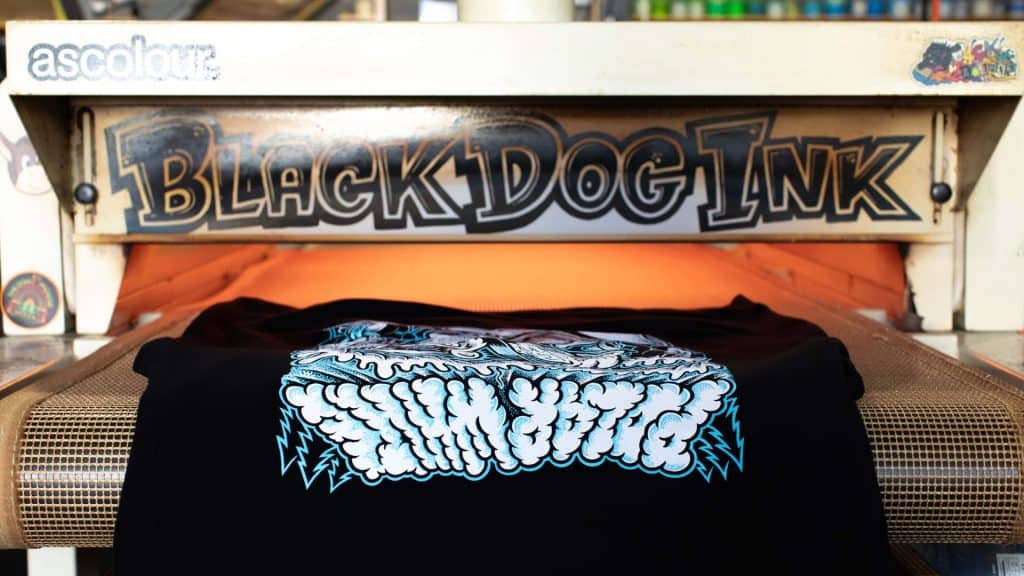
Run the garments through your conveyor oven before printing on them. Yes, it’s an extra step but it reduces on-press headaches and misprints that cost you time and money.
This is one reason many larger shops profile dryers regularly throughout the year.
The Key Takeaway
Most printers assume the garment is a constant.
It isn’t.
The ink may be the same.
The mesh may be the same.
The dryer settings may be the same.
But during winter, the garment itself changes.
And understanding that can explain a lot of the strange production issues that appear during hoodie season.
Because sometimes the problem isn’t your process.
It’s the moisture hiding inside the garment.
Want more like this?
We break down real production problems like this based on what we’re seeing in shops every day.
If you want more technical insights, setup tips, and practical fixes—join the email list and stay in the loop – Sign up here
FAQs
Can hoodies really absorb enough moisture to affect printing?
Yes. Cotton and fleece garments naturally absorb moisture from the environment. During colder, more humid months, this can influence flashing and curing behaviour.
Why do hoodie jobs feel different to print during winter?
The garment may contain more moisture than it did during warmer months. This changes how heat moves through the fabric during flashing and curing.
Does moisture affect plastisol curing?
Indirectly, yes. Moisture requires energy to evaporate, meaning part of the heat applied is used to dry the garment before curing the ink.
Are fleece garments more affected?
Generally yes. Heavier garments and fleece-lined garments can hold more moisture and require more energy during production.
What’s the best way to manage moisture in winter?
Proper garment storage, allowing garments to acclimatise before printing, improving airflow, and closely monitoring curing performance are the most effective approaches