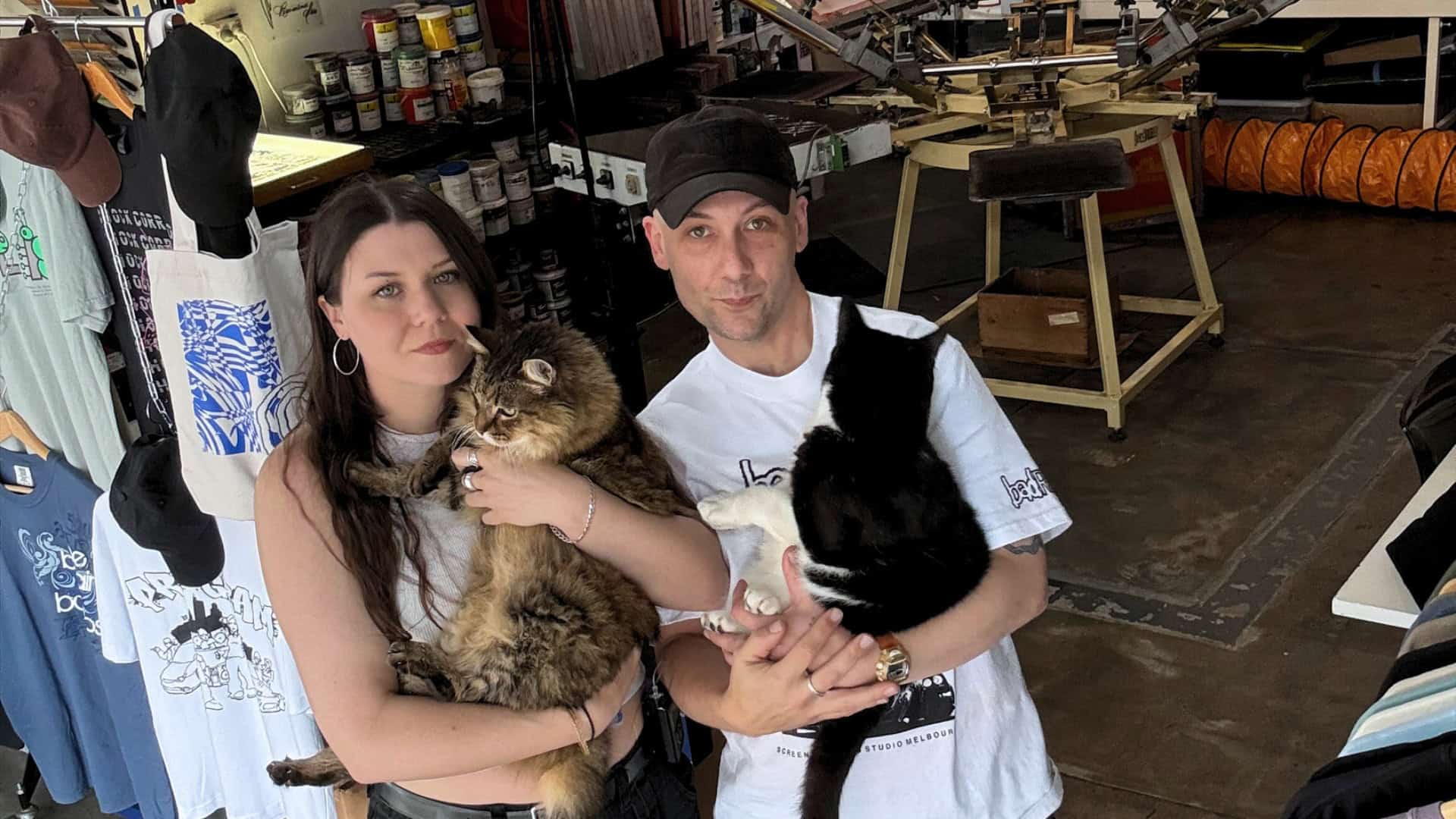
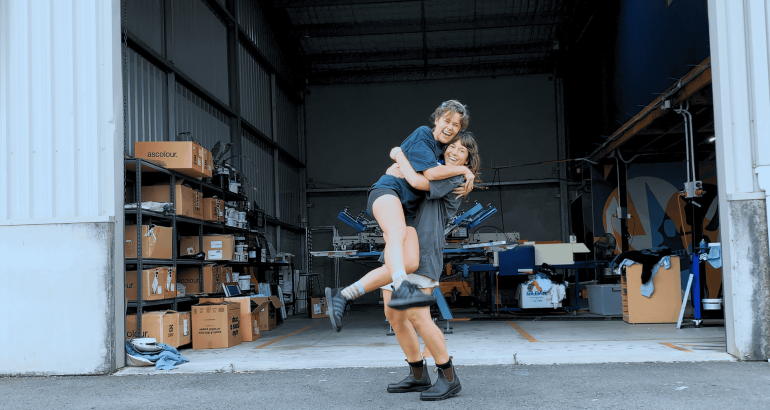
Getting to know Emma Pullin & Lisa Diebold, owners of Soft Power Studio
In an industry that keeps moving faster, Soft Power Studio are holding onto something slower, messier, and more human.
For Emma Pullin and Lisa Diebold, screen printing has never just been about putting ink on garments. It’s about process. Problem solving. Colour mixed by eye. Learning from other printers. Fixing machines. Making mistakes. And keeping an analogue craft alive in a world that keeps leaning digital.
Their journey into print didn’t follow one clean path.
Lisa came through graphic design, old surf tees, and a van full of second-hand screens, inks, and squeegees. Emma came through stencil making, art school, band merch, machinery, production floors, and the deep end of running print setups before she ever felt fully ready.
Together, they took over Kraken Kreative and turned it into Soft Power Studio in January 2023 — a female-owned and run print shop built on craft, community, resilience, and the belief that screen printing still holds real value.
In this Behind The Mesh feature, we get to know Emma and Lisa, the story behind Soft Power Studio, and why they believe the best parts of printing are often the ones you can’t shortcut.
Let’s dive in.
Follow Emma, Lisa and the Soft Power Studio crew on:
Website: www.softpowerstudio.com.au
Instagram: @softpower_studio
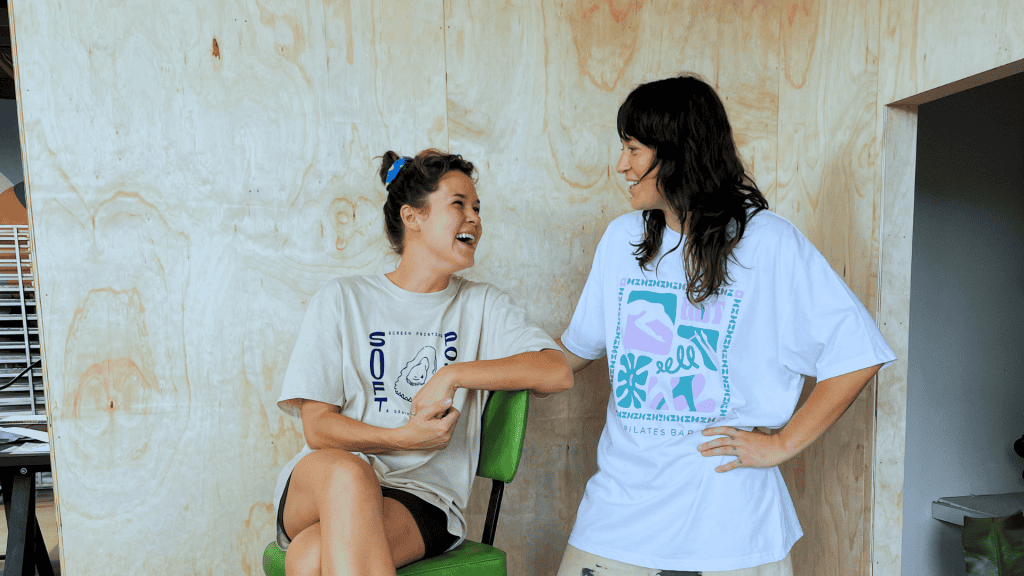
About Lisa & Emma
List 3 things about yourself – fun facts, hobbies, pets or interests
- Emma once caught a yabby with a pizza shape.
- Lisa had 2 pet turtles called Link and Guus.
- Lisa and Emma are both Year of the Horse.
Describe your screen printing journey. How and when did you get started and what has been your biggest learning experience?
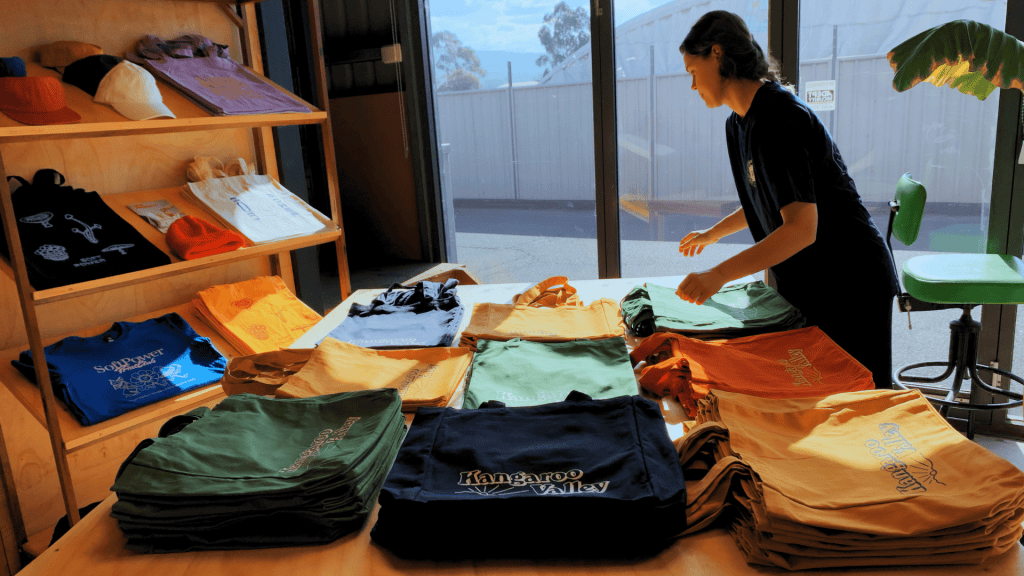
Lisa: My screen printing journey started in my head when I was a teenager I reckon. I always wanted to make art and put it on clothes. Then, in my early 20’s, I got really obsessed with collecting old surf and animal t-shirts from the 80’s-90’s. They blew my mind. I was studying graphic design at uni at the time. I realised I didn’t like computers (at all) so really wanted to find a way to still make designs but not be a designer. After some years in the design industry I bought a van and drove to Far North QLD and met an old fella there printing out of his shed. He was getting rid of all his old gear so I bought all his screens, inks and squeegees. I was living in my car at the time so it all went into storage until I settled down back in Wollongong, where I got a job as a designer at Kraken Kreative (which is the name of our joint before we bought it off our old boss). I really wanted to know how to screen print and use that gear I had sitting in storage, so I was stoked to see how it all worked.
Emma was the head screen printer at Kraken (my idol), and soon after starting my job there, Covid hit. Our boss Sion went home to work on his house renos and left Emma and I to man the place. Design work dried up so I finally had some time to learn how to screen print – I relished the manual process.
Emma and I worked together at Kraken for about 4-5 years, and then our boss offered to sell us the biz because he wanted to travel with his fam and pursue other creative endeavours on the road. We said yes, and Soft Power was born in Jan 2023.
Since then, it’s been lesson after lesson after lesson. As soon as you think you have mastered the art of screen printing, something will happen, or we’ll talk to one of our (very lovely) Jones Print Technology advisers and realise, wow, we have maybe scraped the tip of the iceberg in terms of screen printing knowledge. I think that’s what I love most about this industry: you can be as DIY as possible to get started, then you can just keep growing and learning about techniques and technology forever and never get bored with it.
Emma: I learnt how to make stencils with my brother when we were kids. We’d spray paint our designs on anything we could. We did a few shirts this way, but you’d never get rid of the paint smell. Our mum was thrilled when she discovered we’d spray painted the microwave. It wasn’t until I went to art school I came across print making and screen printing in a more functional way. The print makers seemed organised and careful, I felt I was too messy for that and went off to major in painting instead.
A few years later I was playing in a band and started screen printing merch to sell at shows, using the same stencil method we used on mum’s microwave. I started a design and print business in 2017 through the NEIS scheme. My business model was based on creating merch for bands. I quickly realised bands had no money and that model was pretty flawed.
I went for a job at a uniform store the following year to make ends meet. The head printer Paulie was a musician, and we’d chat non-stop music while working on the auto machine together. He taught me so much about printing, maintaining and fixing machinery. I was thrown in the deep end when he became unwell, and I became the head printer for over 6 months. It was the first taste of running the full production, working both auto and manual set ups, managing screens and colour mixing. I got a lot of confidence from that time. I’m eternally grateful for the patience Paulie showed me while working with him. He was the opposite to so many fiery men I’ve worked with, and he created a great environment for learning.
I’d known of Sion and Kraken Kreative since I moved to Wollongong in 2016. I was struggling with multi coloured prints and bumped into Sion at a cafe. He gave me a can of spray glue and said, “good luck”. I was so grateful for a little nod of approval. A couple of years later I heard his printer was moving on so hit him up for a job. I was relieved to be back in a more art environment after keeping up the facade of being “normal” for a year at the uniform store. Sion and his partner had just had their second kid. I was working alone, coming in early and leaving late. It was closer to life in a paint studio which I loved. Working in these two very different environments gave me a great scope of the industry, what was essential and what was you could get away without. In screen printing there is always an element of DIY somewhere, something that has been brought in from home when something broke and became an essential part of daily procedures. There is an element of “everything is treasure” in this, which I love.
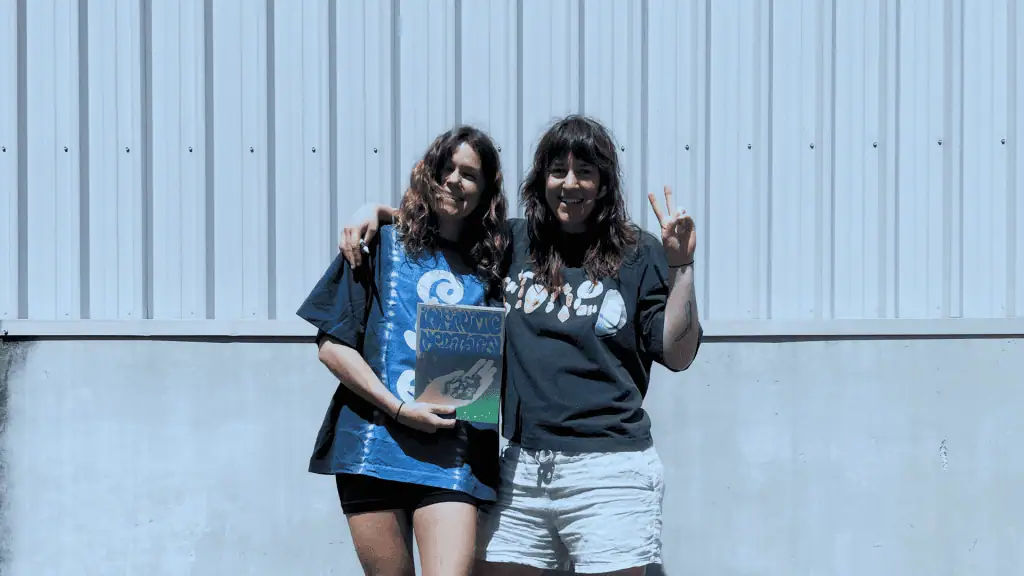
Meeting Lisa at Kraken was a special time. She was all bright eyed and in love with the process, it was infectious. When all three of us (Sion, Lisa and I) would get together we’d brainstorm all the wildest ideas and plans. It was special when Sion offered to sell us the business when he’d come to the end of his Wollongong time. Another little nod.
We’re still here, learning and in love with the analogue process. It feels important to us to keep the trade alive as so many moves into digital processes. We are determined to teach our kids to bootleg their band tees one day and see that energy and excitement for screen printing live on : )
Tell us about your proudest screen printing project. What made it special and what did you learn from it?
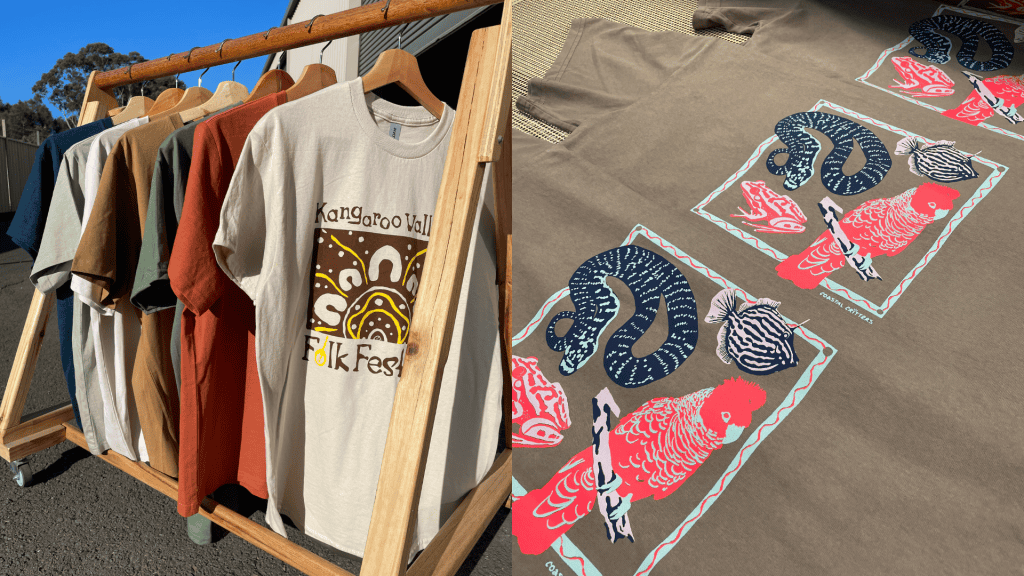
One of our first jobs as Soft Power was for a local window company called Hanlon Windows. It was 700 pieces with 2 designs that Lisa created. We got our friends in to help load and unload the auto. At the end of that job we’d felt like we had proven something to ourselves. We could handle a job from the idea phase all the way through to the packing and delivering AND we had fun doing it.
Industry
What are your thoughts on the current trends in screen printing? Do you see any emerging styles or techniques that excite you?
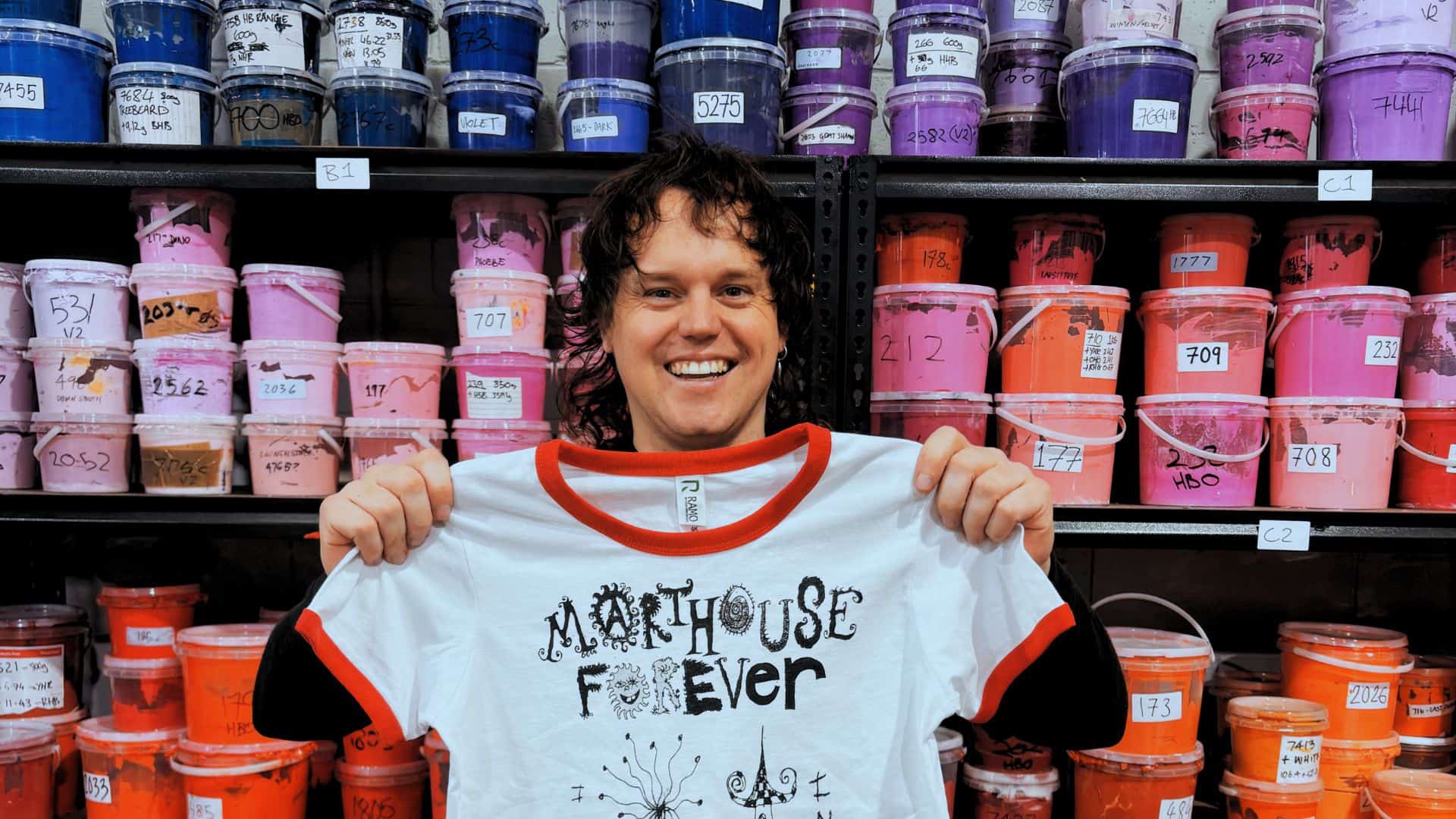
We feel like the industry is moving more to digital processes and cheaper processes, we know this is needed in this economy, but we still believe in the quality of a hand printed print, colours mixed by eye, printing on natural fibres that will last as long as the print. We love the skill of screen printing, the constant problem solving and re-thinking of a process to work around an issue that presents itself on most print jobs. We believe that holds value in a world that is constantly trying to cut corners for a profit, screen printing does not allow for short cuts.
What role does the online community play in your screen printing practice? How do you connect with other printers and share knowledge?
Our online community is a way for us to stay connected in the industry despite being in quite an isolated location out in our warehouse at the back of Albion Park which is south of Wollongong. As a female owned and run business, we have found the online space has connected us with other businesses that are similar. It’s such a beautiful thing when you have mates cheering for you that you may not have ever met physically.
We also use the internet to hassle Alex at Jones Brother 24/7 hehe 🙂 We find online screen printing groups (like on Facebook and insta DM’s) super handy to ask for and give advice when things go awry. With such a problem-solving based industry sharing knowledge is so valuable and we are super grateful for it!
Shop Floor
What is your most treasured product or piece of equipment on the floor that has made your life easier as a printer? Why?
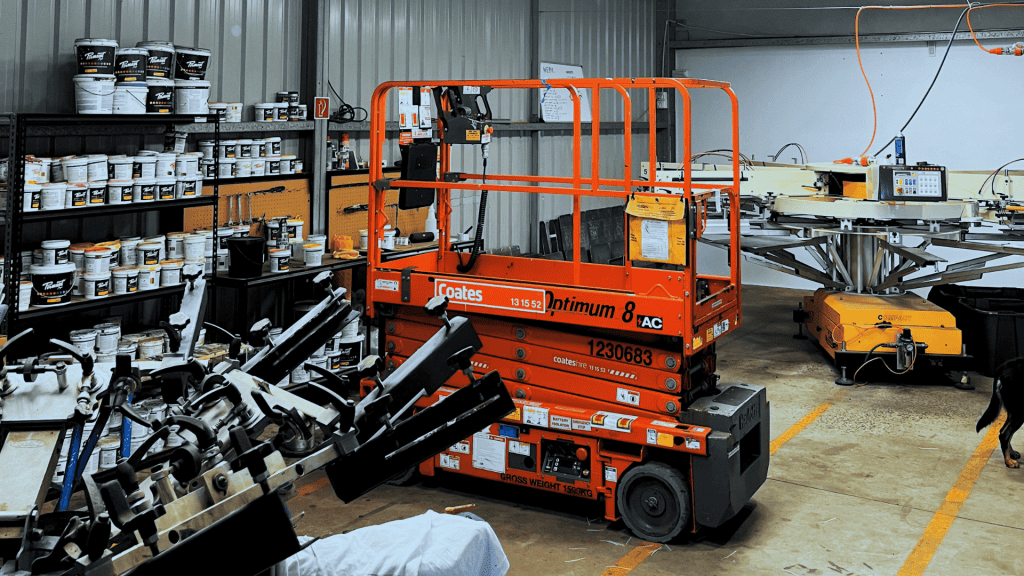
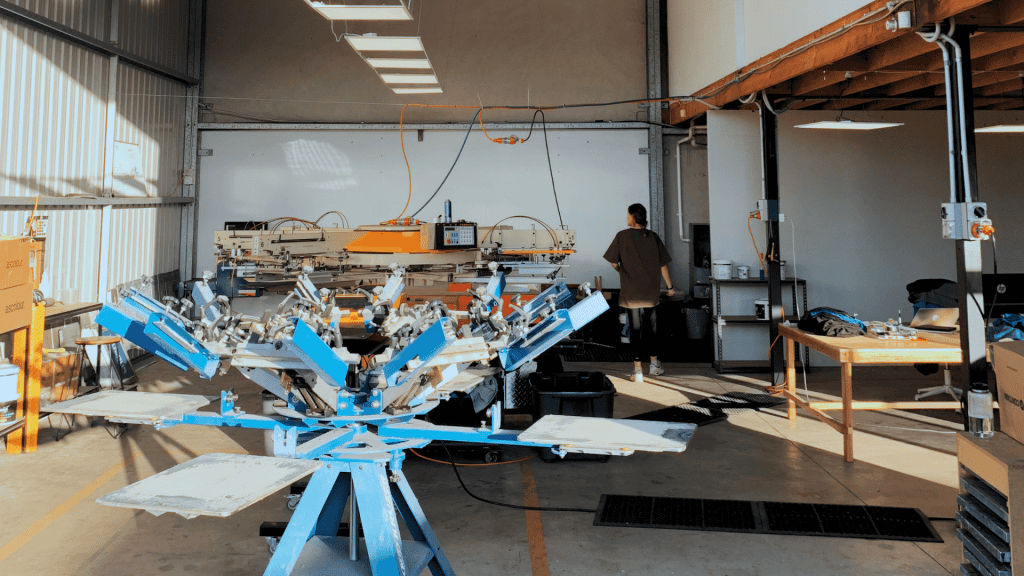
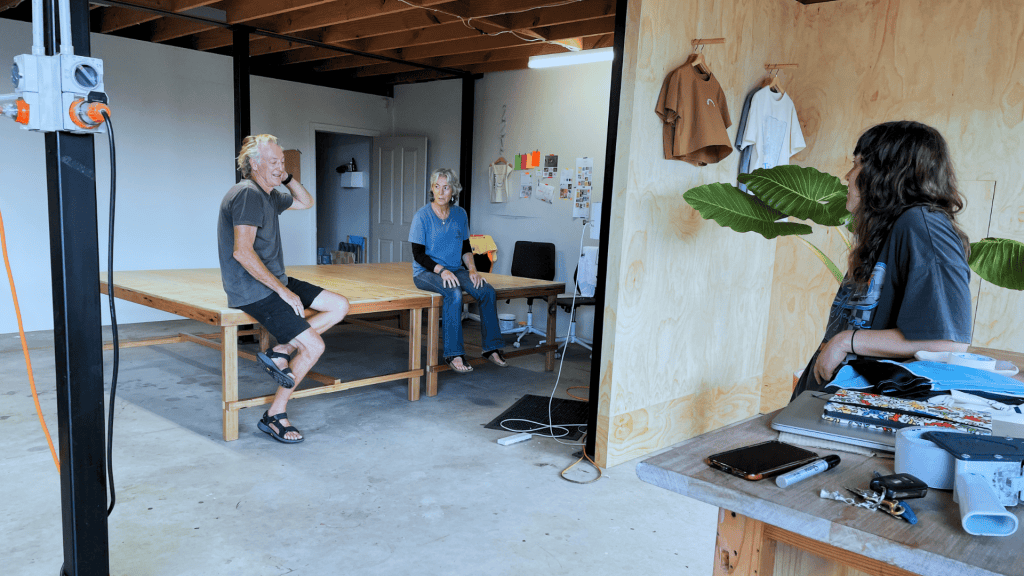
We would say our staff member Olivia, but they are a person not equipment, so I guess our TAS Auto. It’s allowed us to not ruin our bodies. We used to get repetitive strain injuries pretty regularly which was scary when we had no other workers to fall back on.
Now we just have mental strain from working issues we have with the machine hehe… It’s all character building. It allows us to work on large scale jobs which are great for us. We also take a lot of pride in being able to maintain and repair our machines.
What is on your wish list for your shop floor this year?
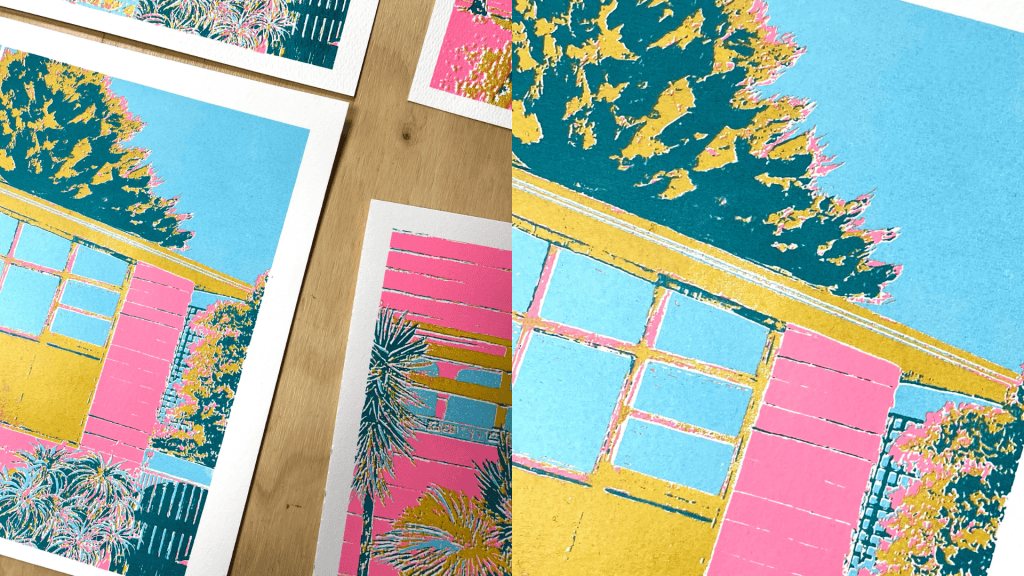
We’d love a drying rack for works on paper. We see them all the time but always have a more pressing needs at the time.
Advice
What advice would you give to aspiring screen printers? What are the essential skills and qualities for success in this field?
I’d say, connecting with other printers. When we both started it was a lot harder to find people willing to share techniques so we relied on YouTube tutorials and heaps of trial and error error error… We’ve relied heavily on other people in the industry to check things by, ask what equipment they use or how business is going. I’d say lean on the print community and always make sure you give back too.
Bonus
Share a funny or unexpected mishap you’ve encountered while screen printing.
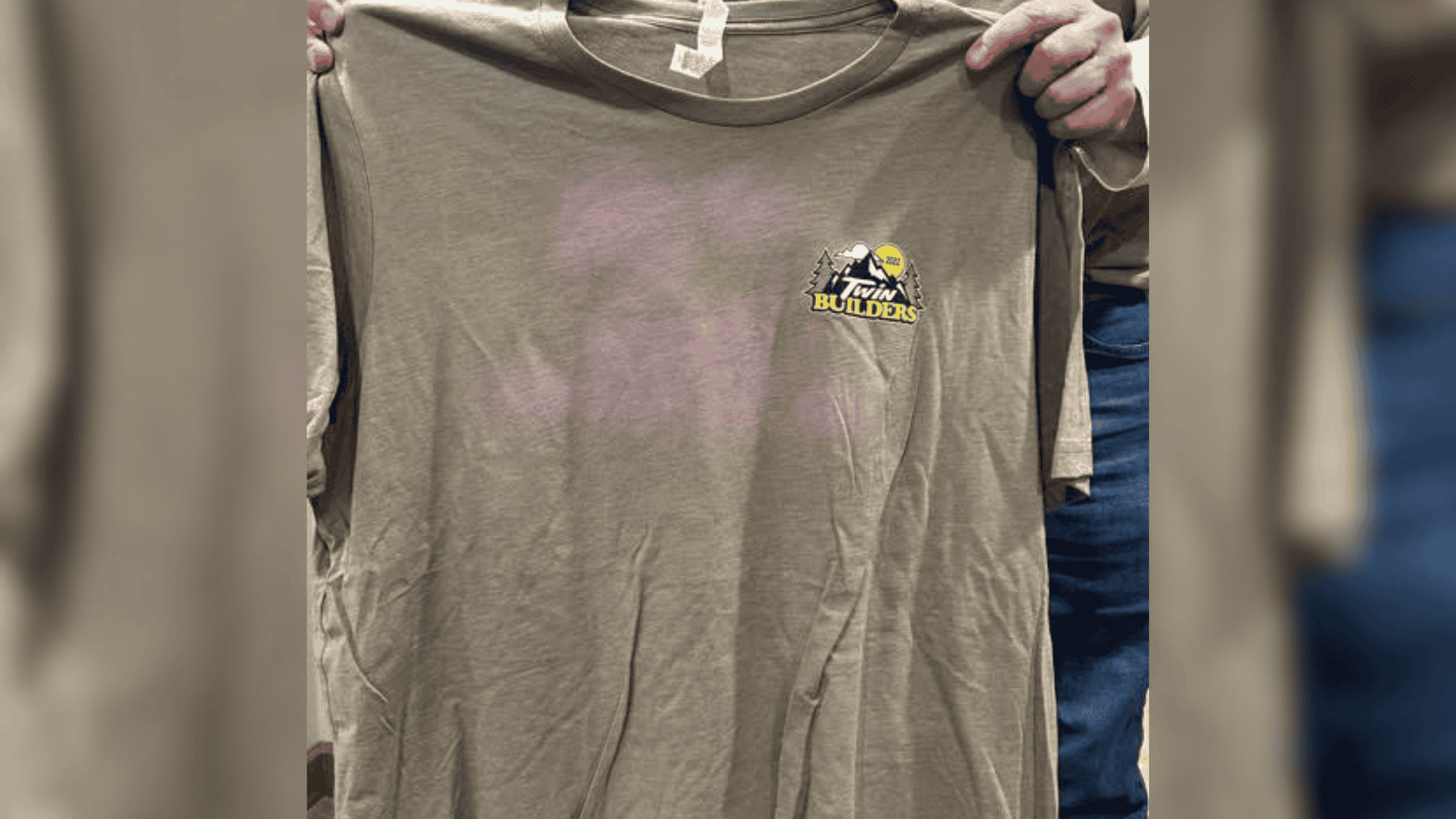
Many shoes and shorts ruined by huge amounts of ink slop. Once Lisa designed an artwork for a musician friend of hers and, after printing about 100 tees, we noticed that the off-white sky in the artwork turned bright yellow after being cured. (We have since diagnosed this issue, fear not!!) Luckily the artist was actually stoked with the new colour palette and appreciated the story behind it!
What’s your go-to playlist for a productive printing session?
We have a joint playlist we have been building over the years, it features She works hard for the money by Donna Summer. This is a go-to when we are pushing through a big job or week.
What is the weirdest/funniest artwork you’ve had to print?
Probably a picture of Jesus firing an AK47 for a Christian group???
Conclusion
Soft Power Studio’s story is a reminder that screen printing is still alive because people keep choosing to care about it.
Not because it’s the fastest option.
Not because it’s the easiest.
And definitely not because it always goes to plan.
But because there’s value in the process.
There’s value in learning through trial and error.
There’s value in asking other printers for help.
There’s value in maintaining old machines, mixing colours by eye, and finding a way through when the job starts fighting back.
For Emma and Lisa, screen printing is part craft, part community, part chaos — and that’s exactly what makes it worth protecting.
Because in a world built around shortcuts, there’s something powerful about choosing the slower way and doing it properly.
That’s what sits behind the mesh.