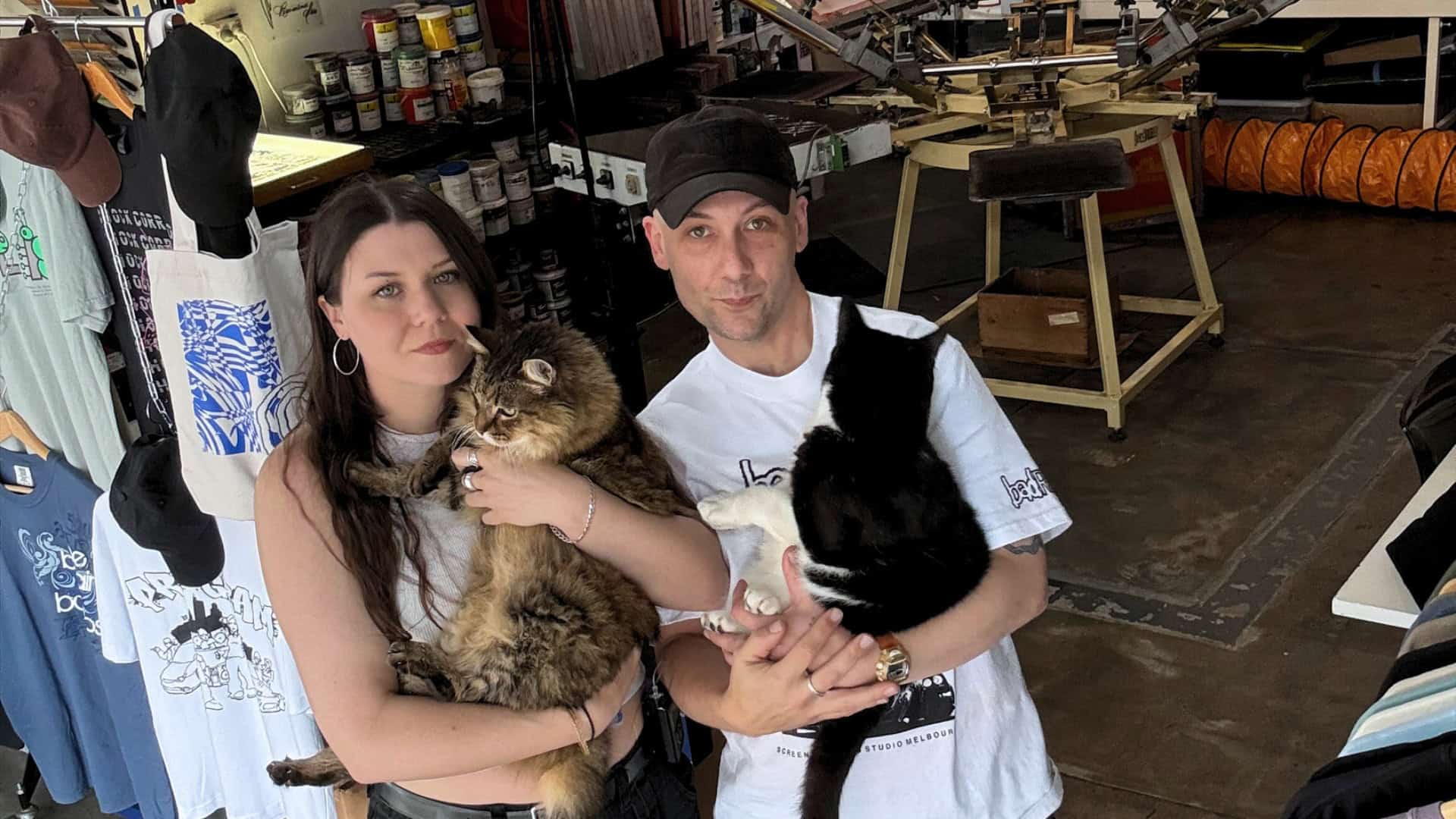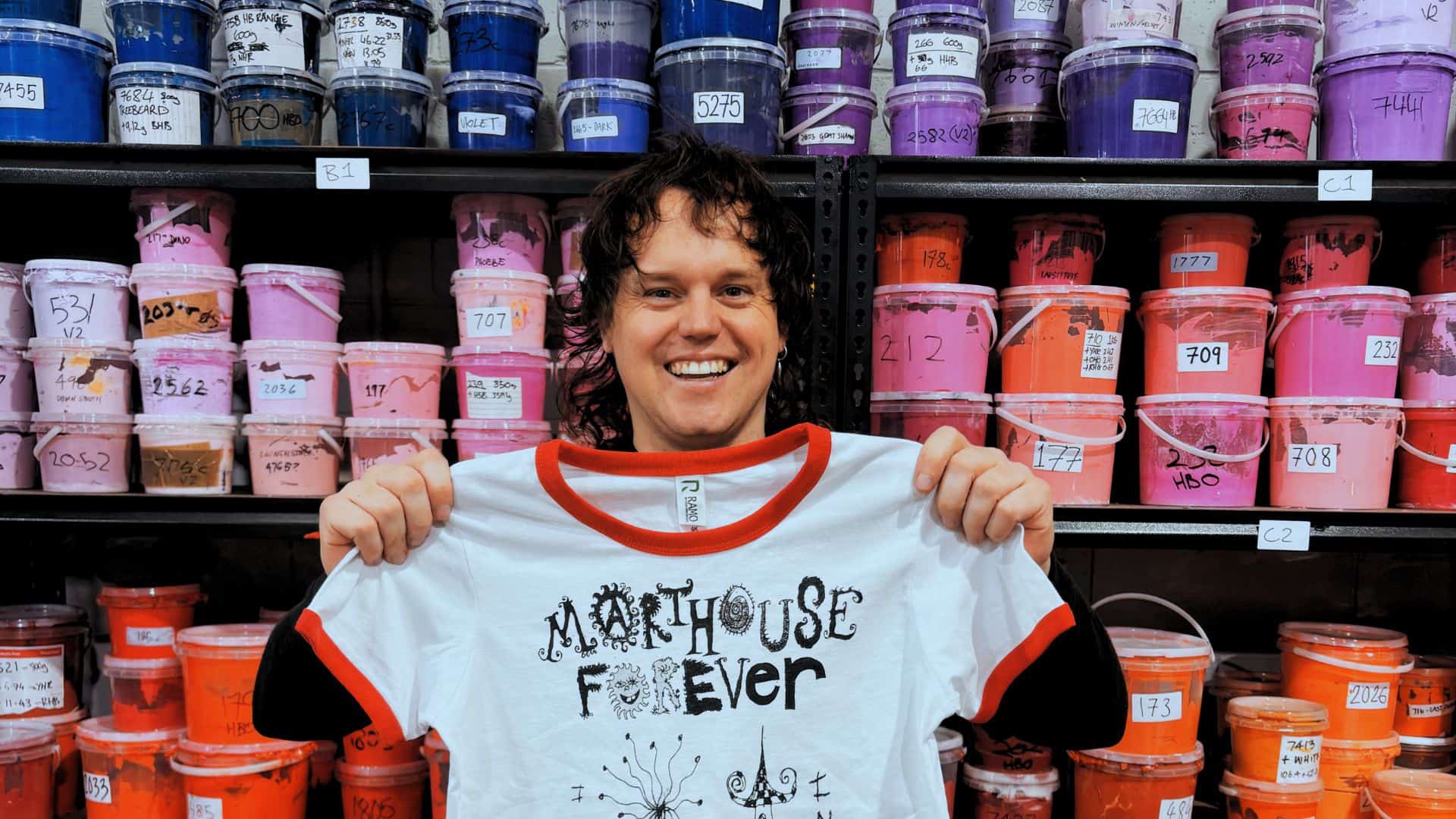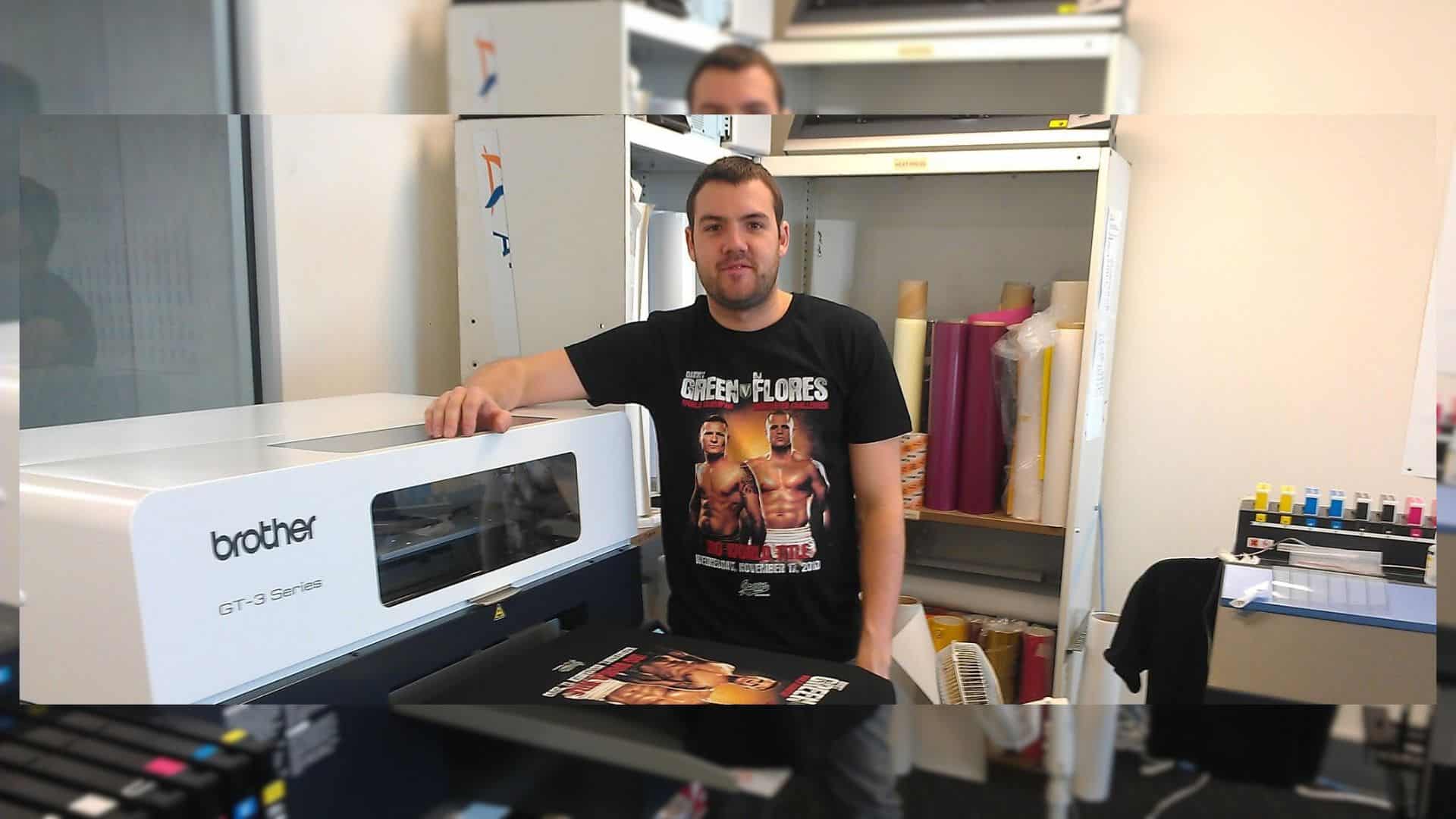
Getting to know Lachlan Rae
Not every story in print starts with someone falling in love with ink.
For Lachlan Rae, the obsession started much earlier — with business, money, and figuring out how things worked. Long before screen printing became the path, he had already developed the mindset that would shape the way he runs a shop today: build systems, find the opportunity, and keep moving.
Printing became the avenue, but business has always been the driver.
From buying into Goodstuff Screen Printing, shifting the focus from graphics to textiles, scaling into a much larger factory, investing heavily in machinery, and building a contract print operation around speed and consistency, Lachlan’s story is less about chasing the most impressive print — and more about building a business that can actually run.
In this Behind The Mesh feature, we get to know Lachlan Rae, the way he thinks about screen printing, and why efficiency, niche, machinery, and grit matter more than trying to be everything to everyone.
Let’s dive in.
Follow Lachlan and the EziBrand crew on:
Website: www.ezibrand.com.au
Instagram: @ezibrand
About Lachlan
List 3 things about yourself – fun facts, hobbies, pets or interests
- I love to build things, so cars is a great hobby
- I love business, so I’m always on the lookout for a new challenge.
- Unfortunately, there isn’t a lot of time for much else, family life is important to me but works definitely pretty time consuming.
Describe your screen printing journey. How and when did you get started and what has been your biggest learning experience?
My business journey probably started for me when I was about 10.
My parents have always been self-employed. So as early as I was able to I was coming up with ideas on what I could do for them to earn some play money. From the age of 3 I already had a pretty good understanding of what a dollar meant. I was borrowing or maybe we should call it forced savings for my parents. Back then cash was everything. So, I’d worked out every Friday night mum had cash in her wallet for groceries. So based on how much money she had in her wallet. I’d worked a system out of how much I should take knowing she wouldn’t notice. This went on for probably nearly a year before one day I decided to show my cousin my stash. Which was just thrown into the bottom of a chest of draws. He told my mum and naturally my stash became hers once more. I had no plan with what to do with it, I just liked Money and that’s never gone away.
Finishing high school, I had no real plan, so I worked for a Painter for 2 weeks. That was enough for me to decide I could do that as a business. So, I setup a painting business did that for about 2 years. My parents weren’t keen on that career path. So, my Dad was looking for businesses to purchase that I manage. Eventually they found one called Goodstuff screen printing. It mainly did 1 colour graphics printing. My Dad back then fancied himself as a bit a business guru, he really didn’t do his research on this one. It was turning over 80k, for which we paid about 80k for. It had 2 staff and 1 owner running it. So, it was seriously negative, but from small things big things can grow. The original plan was we thought it could compliment Ezitag which is the family business. It turned out that didn’t work, but eventually it was able to stand up on it’s own. It took me about 4-5 years to get a handle on screen printing. By around year 4 we’d given the graphics the flick and started focusing on textiles.
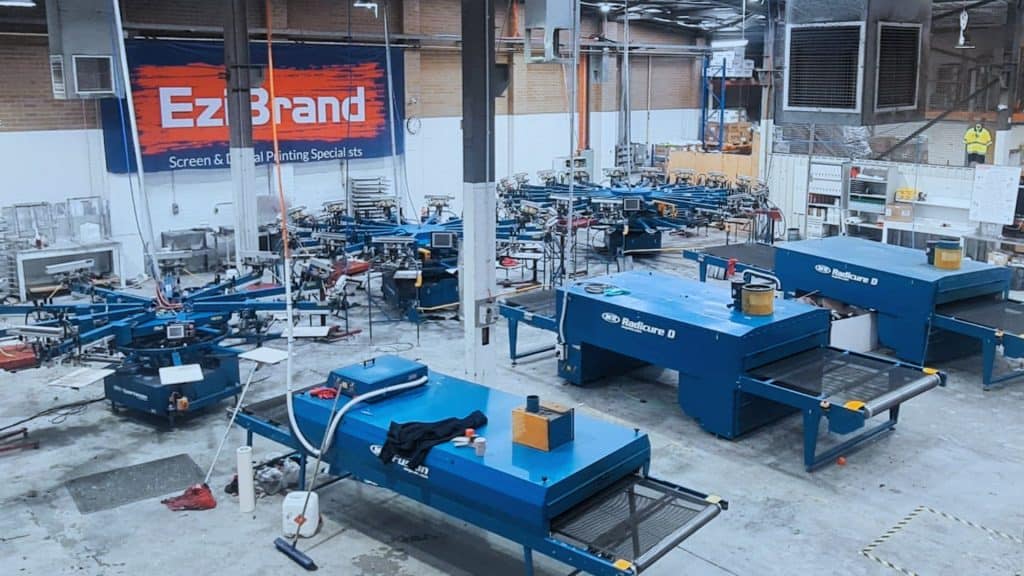
Year 5 was the next big leap, we moved from a small 400sqm factory into a 2000 sqm factory that we had no business occupying. The price was right though and things were looking good. Credit was cheap coming out of the financial crisis. So I leveraged every relationship I could and got a full arsenal of M&R equipment.
By around 2011 i owned half of the business, and I bought out the remaining half in 2022. My father who was my business partner at that point came down with severe lung cancer. So, I had to quickly act to put in place the buyout. He hung in there for about 6 months it was pretty quick. Without putting that in place, the business would have been in a precarious position.
Biggest learning experience:
Efficiency is everything in Screen printing, you need every piece of machinery, if you want to compete. Things like Tri-loc and Computer to screen are essential.
We specialise in contract work primarily for the promotional products industry. Lead-times are everything, flexibility is crucial and quality is also important. Having all the gadgets allows you to have quality fairly well standardised even if you’ve got new printers flowing through. It also makes timing a plannable event instead of a question of a printer’s raw talent.
That’s probably the main thing I’ve learnt along the way. You can either be really good, or you can be really efficient. I’d rather get the work in and get it out. I’m not paid to store a customer’s stock. So the less time it can sit on my shelves the less space I need and the quicker we can get paid.
Tell us about your proudest screen printing project. What made it special and what did you learn from it?
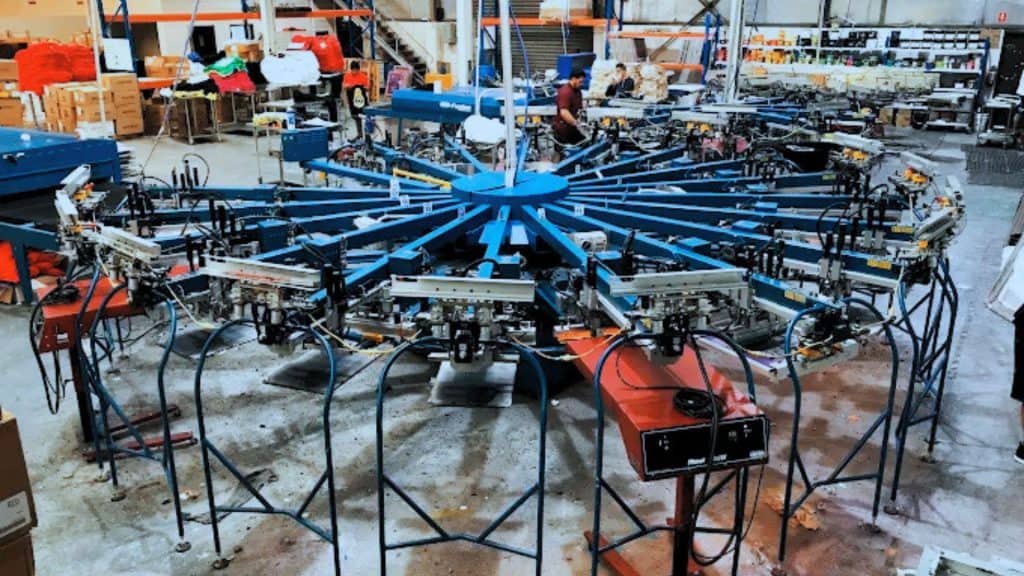
I wouldn’t say emotions is my thing, so I don’t really feel proud. That’s probably what allows me to survive in this cut throat world where a printer can make a 5k error at any given moment. At best I’d say maybe I could say I felt happy when we got the 18colour G3 installed. Things were moving forward, it was a similar feeling when we added Embroidery into our offering 4 years ago. Adding any new process is a challenge and keeps things interesting.
Industry
What are your thoughts on the current trends in screen printing? Do you see any emerging styles or techniques that excite you?
No, being in promo generally we don’t have to keep up with trends. I’d rather leave the difficult printing for someone with raw talent. We will worry about getting out that 1 colour for the client when they want it. Generally if we take on something really technical it will mean I have to print it and I’ve got a business to run. There’s rarely any glory in taking on the high risk contract job where your pushing the envelope.
What role does the online community play in your screen printing practice? How do you connect with other printers and share knowledge?
I mentor a printer in WA through APPA’s mentor program. The program has largely died off but we still message if they need some guidance. I’m happy to assist if people they have business related questions. Business is my passion not printing. Printing is just the avenue I happened to take. I do talk to quite a lot of the larger printers on messenger. Just general chat mostly we will help each other out if need be. It’s a small industry so I’ve you’ve got something someone needs in a pinch. Help them out I’m sure it will come back around eventually.

Shop Floor
What is your most treasured product or piece of equipment on the floor that has made your life easier as a printer? Why?
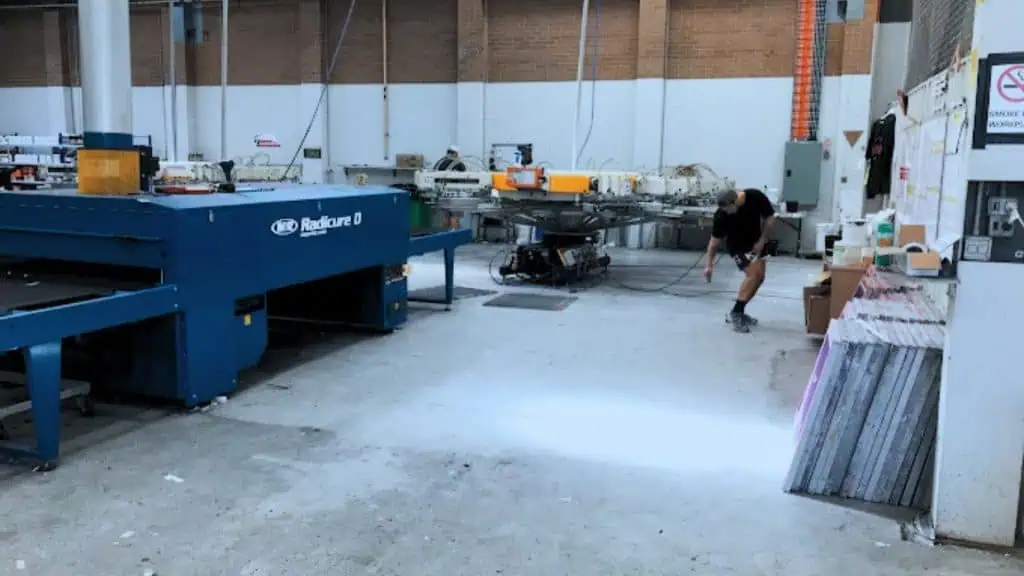
We bought an Ecotex during covid. That was the hardest purchase I’ve ever had to make and I’ve made a lot of purchases. There’s something about pulling the trigger on a piece of equipment that has a percieved zero dollar output. Unfortunately manufacturers don’t sell reclaim units well. The reality of the units is so much more than what it can change your reclaim cost by. In reality it probably doesn’t change the cost of a reclaim over a dip tank. What it does though is allows anyone to reclaim.
It reduces your screen holdings and remeshing by more than half. I have 600 screens on hand, realistically I need about 300. That alone would be a quarter of the cost of the unit. Screens racks I’ve got way too many. The floor flows a lot better after adding the ecotex into the system. We are often reclaiming jobs in less than an hour of them being on press.
What is on your wish list for your shop floor this year?
I just bought T-1’s Ecorinse, that’s going to be exciting to get up and running in the next couple of weeks. I’d really like to get a Laser to screen but for the time being the I-image is hanging in there.
Advice
What advice would you give to aspiring screen printers? What are the essential skills and qualities for success in this field?
Grit and determination is a big one, Everyday will be a new challenge. Probably one of the most important things is to choose your niche. It might be promo, fashion, merch, retail, Direct or contract. Pair it with the appropriate lead time for that sector and send it. Don’t be everything to everyone it will keep you small.
Bonus
Share a funny or unexpected mishap you’ve encountered while screen printing.
When Matt (owner of Jones Brothers) tore his own screen putting ink in. That was when I was printing some samples for him back when we both had more time. It was a classic rookie error. He was so annoyed at himself.
What’s your go-to playlist for a productive printing session?
Since day 1, I’ve never controlled the music. Who’s got time to worry about that, the team play whatever they please. Eventually it just becomes background noise.
What is the weirdest/funniest artwork you’ve had to print?
The weirdest would easily be we print Tea towels for Down n Dirty convention. I’ll let you search that if you please. Thankfully my team just print we don’t really care about what the design is. It’s just another design it makes us great at what we do. People can send whatever they want. We don’t care it’s just more of the same thing. Well just lay our plastisol down as smooth as we can nail their PMS (Pantone colour), hit their due date and move onto the next.
Conclusion
Lachlan’s story is a reminder that screen printing businesses are not all built the same way.
Some are built around craft.
Some are built around creativity.
Some are built around technical challenge.
And some are built around systems, speed, and making sure the work gets done properly, on time, every time.
That doesn’t make the work less valuable. It just means the focus is different.
For Lachlan, success comes from choosing a lane, investing in the right machinery, removing bottlenecks, and understanding that efficiency is what allows a print shop to compete.
Because growth doesn’t come from saying yes to everything.
It comes from knowing exactly what kind of shop you are — and building the floor to support it.
That’s what sits behind the mesh.