As the weather cools down, print shops start seeing the same shift.
There are more hoodies on press. More fleece. More polyester blends. More dark garments that look great blank on the shelf and then start causing problems the moment heat gets involved.
That’s usually when the phrase “low bleed” starts showing up again.
It gets mentioned on ink buckets, in product descriptions, and in conversations about winter printing. But for a lot of printers, it still sits in that vague category of something you’re meant to use on polyester without a clear understanding of what it actually means.
And that matters, because if you’re printing hoodies through the colder months, “low bleed” isn’t just a label. It’s a response to a very specific production problem.
What is low bleed ink?
In simple terms, a low bleed ink is an ink that has been formulated to reduce dye migration from the garment into the printed ink layer during and after curing.
That’s the short definition.
What that means in practice is this:
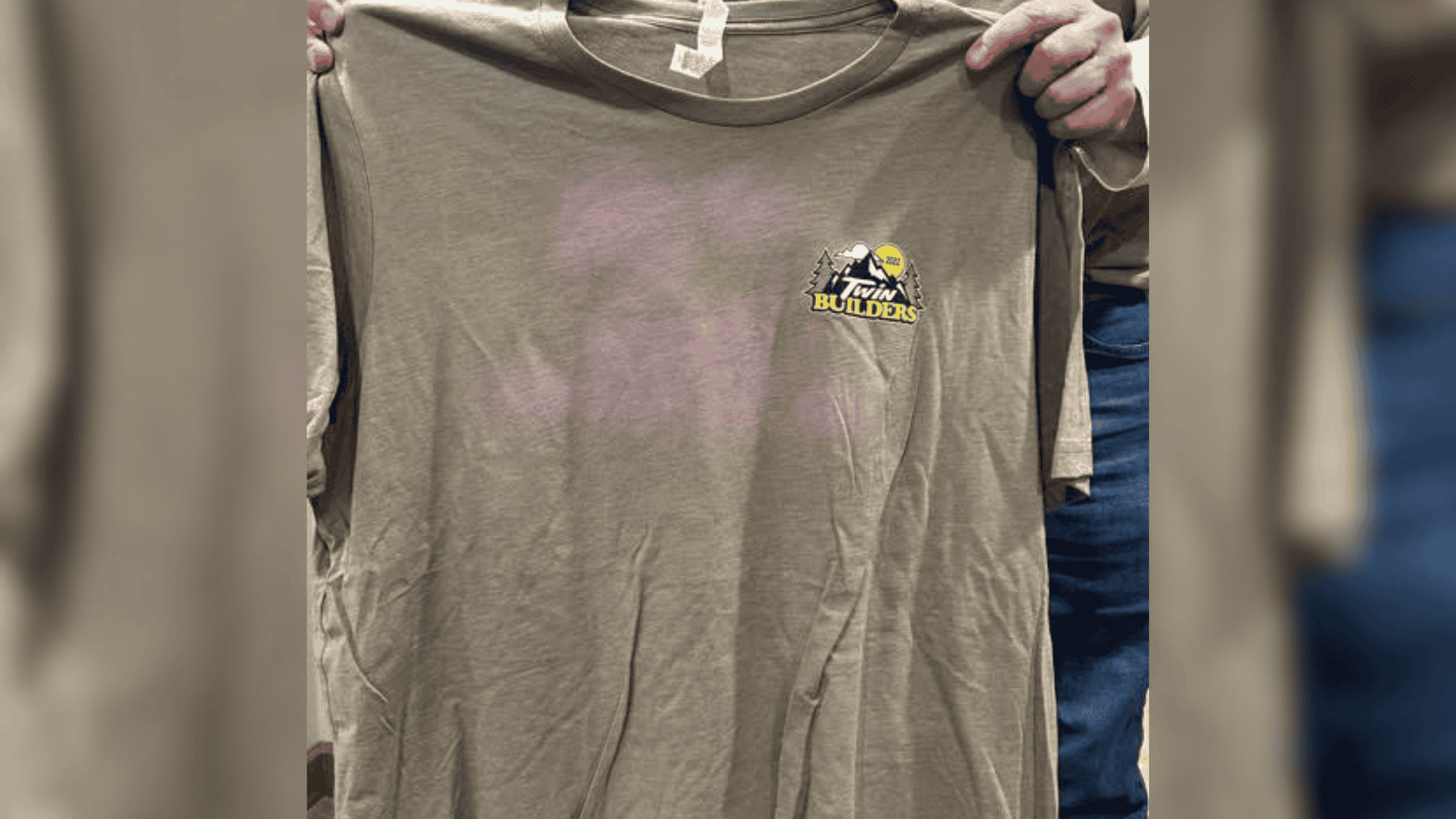
when a dyed polyester or poly-blend garment is exposed to heat, the dyes inside the fabric can become mobile and start moving upward into the print. When that happens, whites can shift, colours can dull, and a print that looked clean off the press can change later.
A low bleed ink is designed to make that movement harder, slower, and less visible.
It does not mean dye migration becomes impossible. It means the ink system has been built to resist it.
Why this becomes more important in winter
This issue tends to become more obvious as we move deeper into hoodie season because the garments change.
You’re not just printing lightweight cotton tees anymore. You’re dealing with heavier blends, fleece-backed garments, darker colours, and fabrics that hold more dye and retain more heat.
That creates the perfect conditions for migration.
A print can look fine straight after curing, then shift later once the garment has had more time to settle. That’s why winter jobs can feel more unpredictable if the ink system isn’t matched to the garment.
This is also why printers often think they have a white ink problem, when what they really have is a dye migration problem.
That ties closely into:
Printing Hoodies: Why Your White Ink Is Probably the Problem
So what actually makes an ink “low bleed”?
This is the part that usually gets skipped.
A low bleed ink isn’t low bleed because of one magic ingredient. It’s low bleed because of how the entire ink film is engineered.
At a material level, dye migration is basically a diffusion problem. Dye is trying to move from the fabric into the ink layer. So the job of a low bleed system is to make that ink layer harder to pass through.
That comes down to a few key parts of the formulation.
The resin system: building a tighter ink film
The resin system is the backbone of the ink.
In a low bleed ink, the resin is designed to cure into a denser, tighter film. That matters because a loose or more permeable ink film gives migrating dye more opportunity to move through it.
A tighter resin structure helps reduce:
- porosity
- permeability
- the speed at which dye can diffuse through the print layer
That’s one of the main reasons low bleed inks behave differently to a standard plastisol, even when they may look similar in the bucket.
The ink film itself is simply more resistant.
Opacity and pigment load: physically hiding and slowing the problem
The next part is opacity.
Low bleed inks often carry a stronger pigment load, or are built to maintain higher opacity, because coverage plays an important role in reducing how visible migration becomes.
That doesn’t mean opacity alone makes an ink low bleed. But it does help in two ways:
first, it creates a more solid visual layer over the garment
and second, it makes it harder for underlying dye shift to show through as quickly
This is why some low bleed whites feel like they’re doing two jobs at once:
- covering the garment properly
- while also helping hold back visible colour change
That relationship between deposit, opacity, and result also connects to:
Best Squeegee Hardness for Screen Printing (65 vs 75 vs 85 Explained)
and
How to Select a Mesh Count
Additives and migration inhibitors: the part you don’t see
A big part of low bleed performance comes from additives inside the ink system.
These can include:
- migration inhibitors
- stabilisers
- modifiers that help control how the film behaves under heat
The exact chemistry varies from one manufacturer to another, but the purpose is generally the same: to reduce how easily dye can move through the ink layer, and to limit how strongly it shows if some migration does occur.
This is why “low bleed” should really be understood as a system property, not a buzzword.
It’s the combined result of the resin, the opacity, the additive package, and the cure behaviour all working together.
Low cure matters too
A lot of low bleed inks are also low cure inks, and that’s not an accident.
The less heat required to properly fuse the ink, the less heat you’re putting into the garment. And the less heat you put into the garment, the less you activate the dyes sitting inside the polyester.
So low cure supports low bleed by reducing one of the main triggers for dye migration in the first place.
That doesn’t eliminate the risk entirely, but it reduces the chance of turning the garment into the thing that ruins the print.
This is one of the reasons low bleed and low cure often appear together in the same conversation.
Where printers get it wrong
A lot of problems start when printers assume low bleed means “safe on anything.”
It doesn’t.
Low bleed reduces risk. It does not erase the chemistry of the garment underneath it.
That’s why people get caught out using a low bleed white on a difficult hoodie, then flashing it too hard, curing it too hot, or assuming one good test on one garment means every similar garment will behave the same way.
The ink matters, but so does the rest of the setup.
That includes:
- cure temperature
- dwell time
- garment composition
- ink deposit
- whether a barrier system is needed underneath
- When low bleed isn’t enough
On some garments, particularly dark polyester, fleece, or heavily dyed blends, low bleed alone may not be enough.
That’s where a barrier base comes in.
A low bleed ink is designed to resist migration through the print film.
A barrier base is designed to physically block migration before it reaches the top print layer.
That’s an important distinction.
If you’re regularly printing difficult winter garments, this is where the conversation usually moves next:
What Is a Barrier Base in Screen Printing? Why UPLC Grey Matters for Hoodie Printing
Bringing it back to practical decisions
The easiest way to think about low bleed is this:
it’s not a magic fix, and it’s not just a marketing term.
It’s an ink system that has been built to make dye migration harder by:
- forming a tighter cured film
- carrying stronger opacity
- using additives that help control dye movement
- often curing at lower temperatures to reduce dye activation
That matters most when you’re printing garments that are already prone to trouble.
And that’s exactly why it becomes such an important topic in winter.
Final thought
Once you understand what low bleed actually means, you stop thinking of it as just “the polyester ink.”
You start seeing it for what it really is: a print film engineered to resist a garment problem.
That doesn’t mean it solves everything. But it does mean you can make better decisions about when to use it, when to test harder, and when to step up to a barrier system instead.
And that’s the difference between reacting to migration after the job is printed and controlling it before it becomes a problem.
Want more like this?
We break down real production problems like this based on what we’re seeing in shops every day.
If you want more technical insights, setup tips, and practical fixes—join the email list and stay in the loop – Sign up here
FAQs
What does “low bleed” actually mean in screen printing?
Low bleed refers to an ink system that has been formulated to reduce dye migration from the garment into the print.
It doesn’t stop dye from moving entirely. Instead, it makes it harder for dye to pass through the ink film and reduces how visible that movement becomes.
👉 It’s about resistance, not prevention.
What actually makes a low bleed ink different from a standard plastisol?
The difference is in how the ink film is built.
Low bleed inks are designed to:
- form a tighter, denser cured film
- reduce permeability
- slow down dye diffusion
They also often include additives that help limit how far dye can travel through the print layer.
👉 It’s the structure of the ink—not just the label—that makes the difference.
Does higher opacity mean better bleed resistance?
Opacity helps, but it’s not the whole story.
A more opaque ink can:
- physically block some dye
- reduce how visible colour shift becomes
But if the ink film is still permeable, dye can continue to move through it over time.
👉 Opacity supports low bleed performance—it doesn’t define it.
Why are low cure inks often linked to low bleed?
Lower cure temperatures reduce how much heat is introduced into the garment.
Less heat means:
- less dye activation
- less mobility
- lower risk of migration
That’s why many low bleed systems are also low cure systems—they’re reducing the cause as well as resisting the effect.
That’s why we highly recommend Union Ink’s UPLC UNIMIX Flexible cure ink range.
Why do some hoodies print fine and others don’t?
This usually comes down to the dye system used during manufacturing.
Different garments may use:
- low energy dyes (more mobile)
- high energy dyes (more stable)
Since you don’t see this from the outside, two similar garments can behave very differently on press.
👉 The inconsistency is often in the garment, not your process.