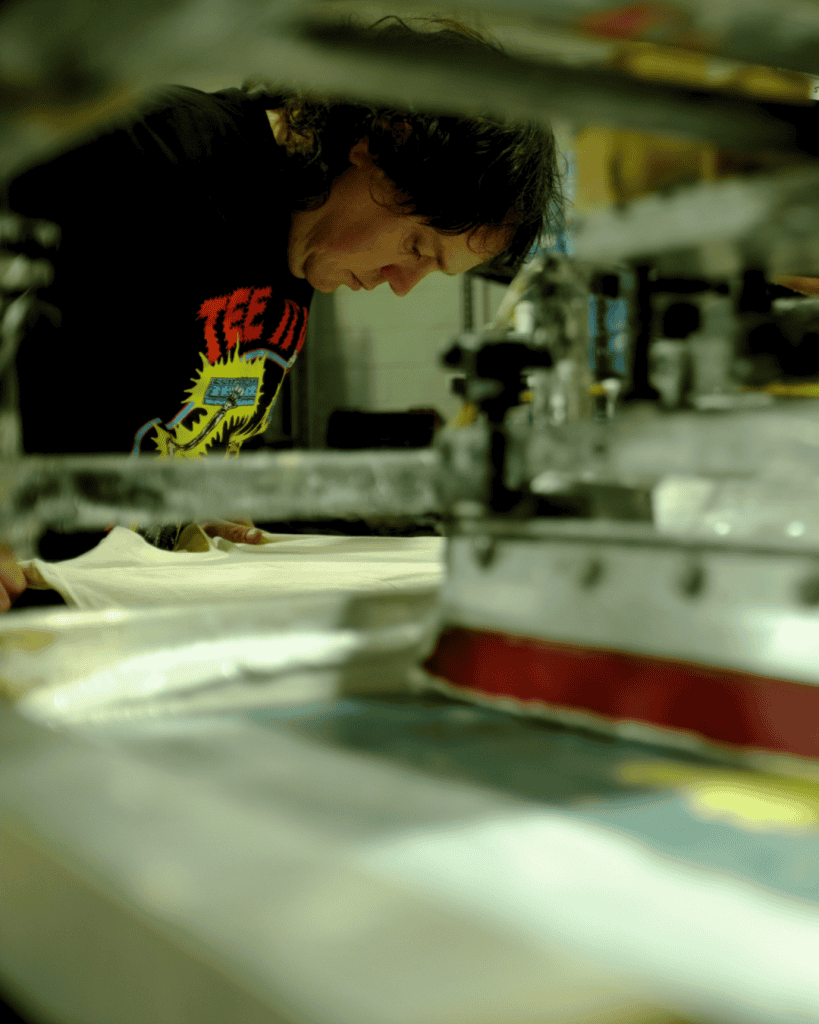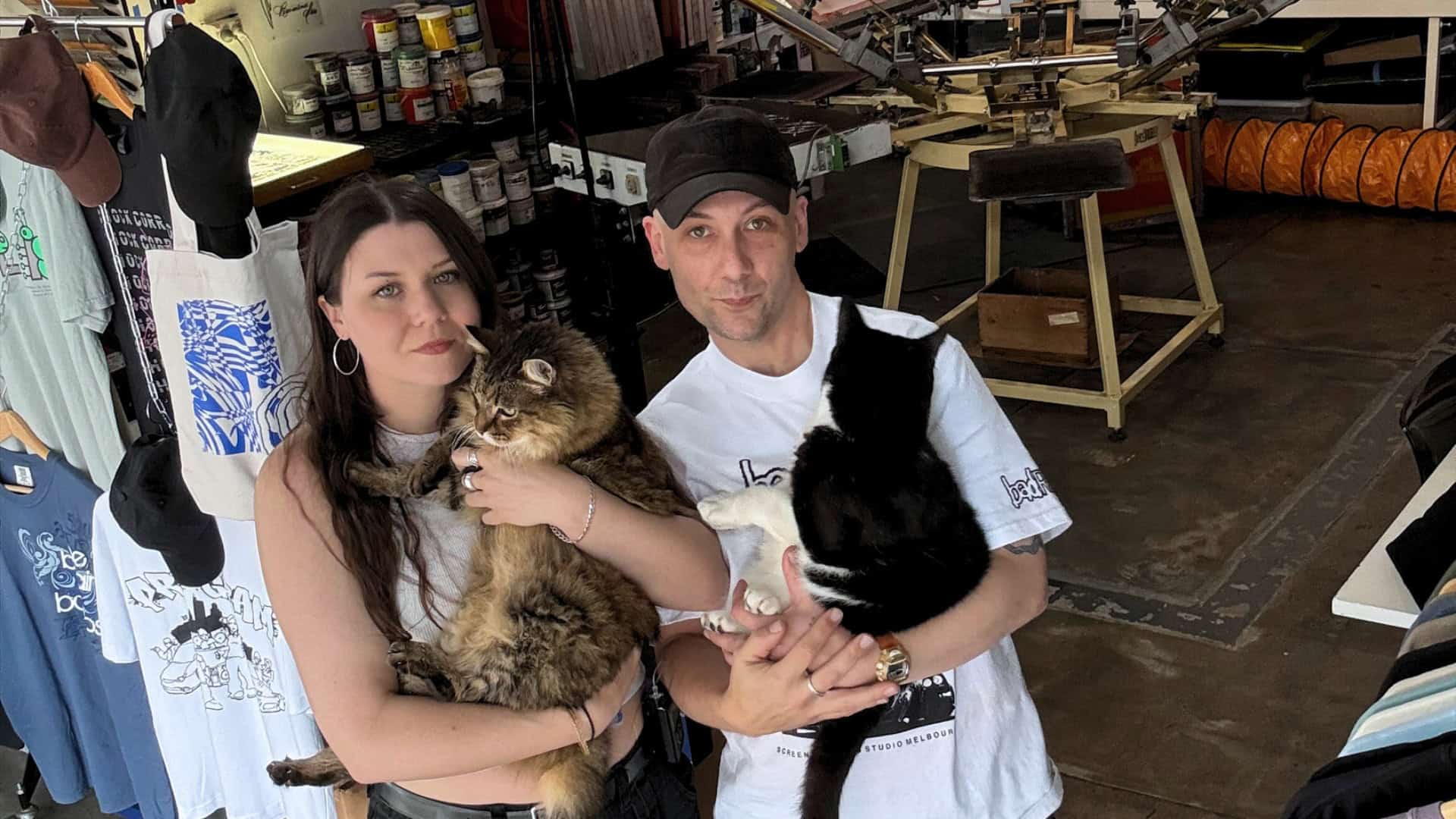
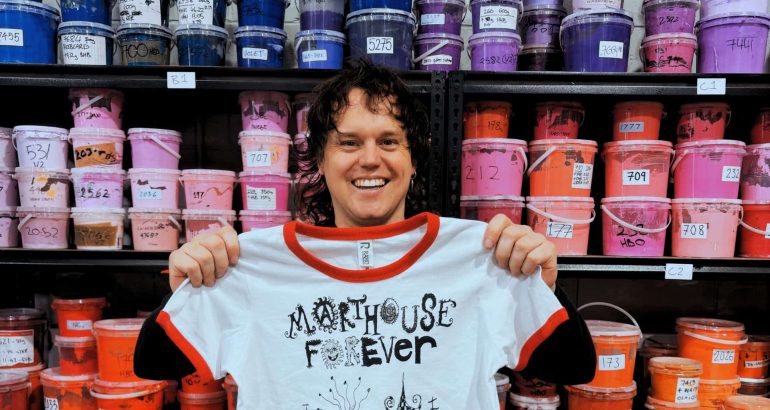
Getting to know Adam, owner of Tee It Up Screenprinting
Some print shops start with a business plan.
Tee It Up Screenprinting started with music, merch, and a borrowed $2k.
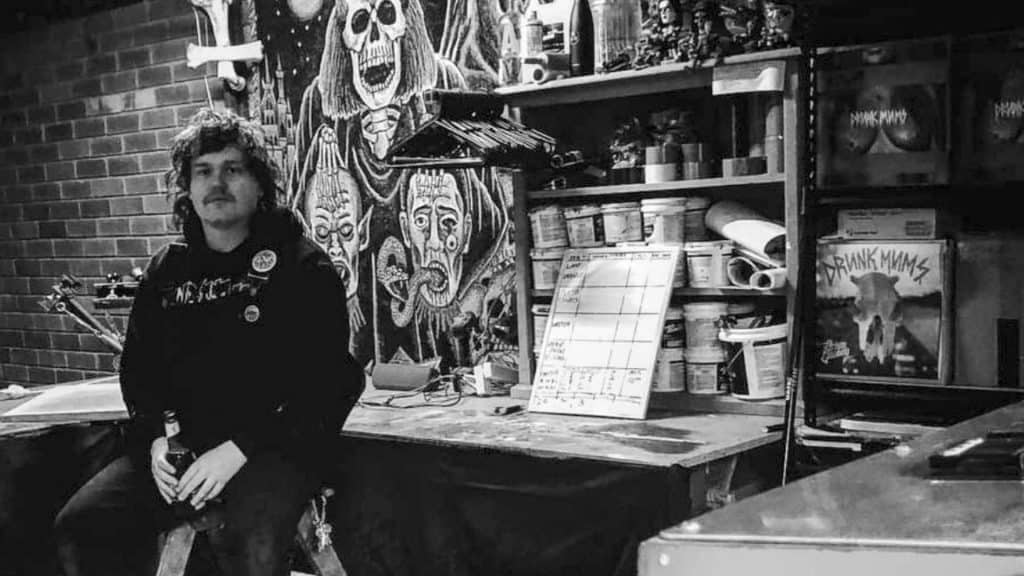
For Adam Ritchie, screenprinting wasn’t something he stepped into through a polished production background. It came through bands, recording, DIY merch, and the need to make things happen with whatever was available at the time.
The early days were far from glamorous — printing in an asbestos-ridden rental shed, heat-gunning between prints, curing everything with a heat press, and learning water-based printing the hard way in a world where most of the available information was about plastisol.
But that’s also what gives the story its character.
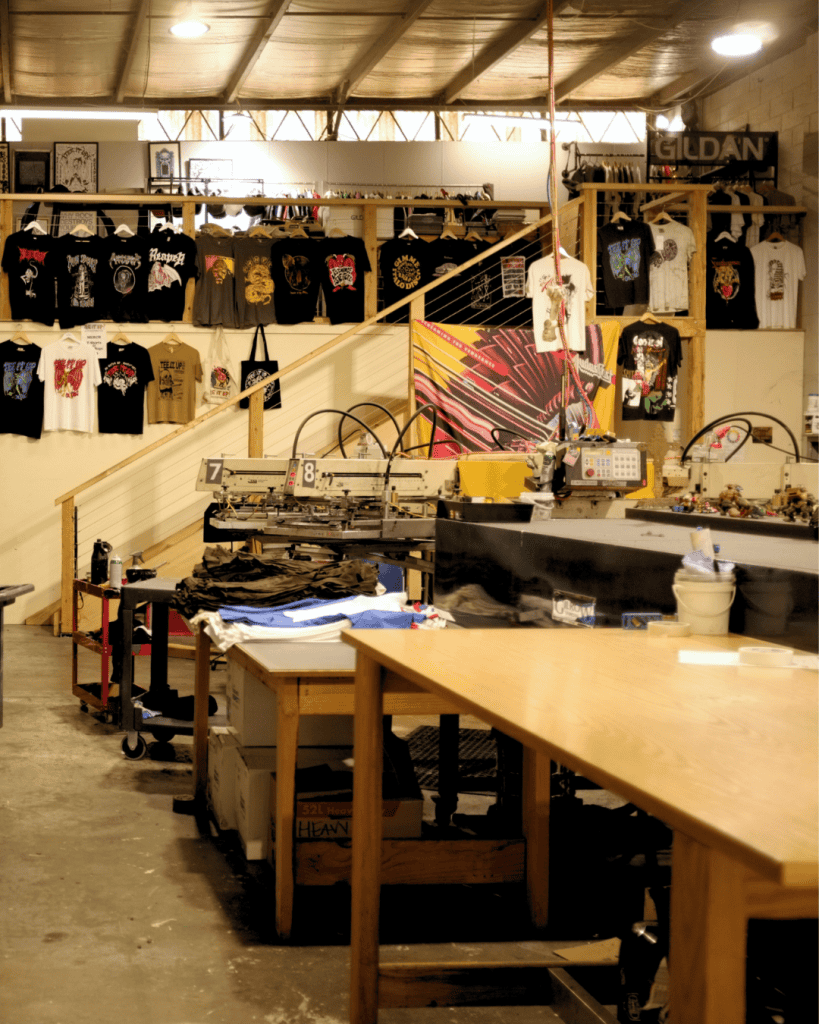
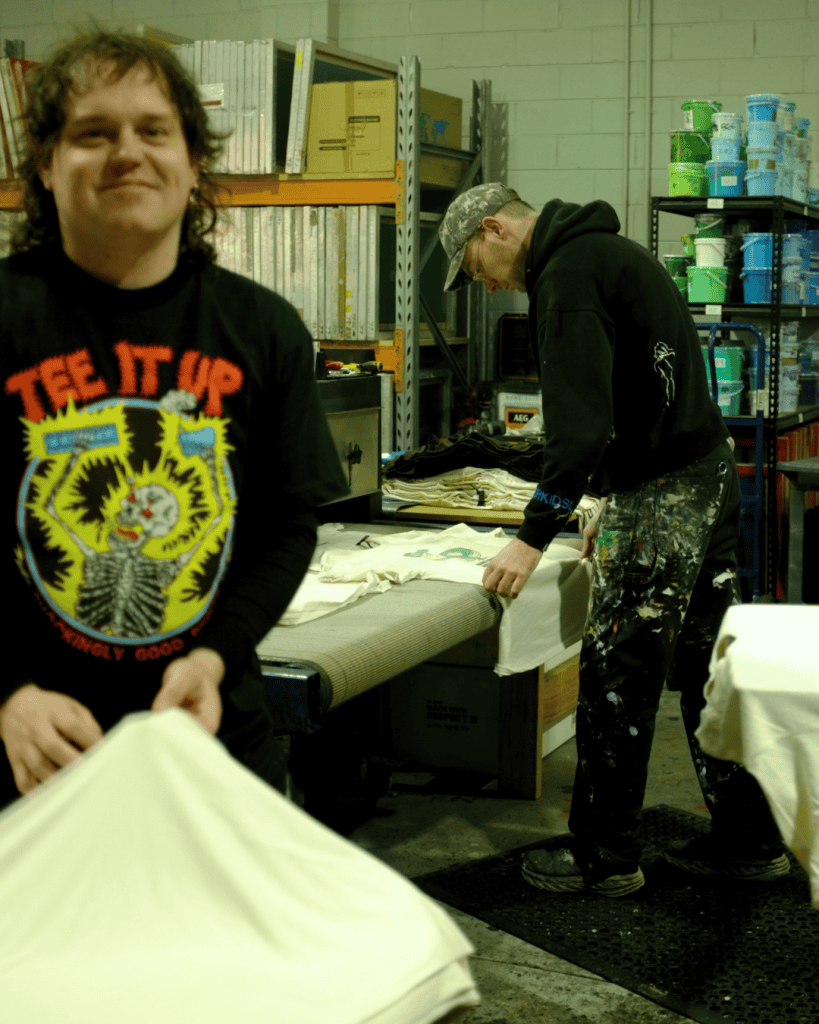
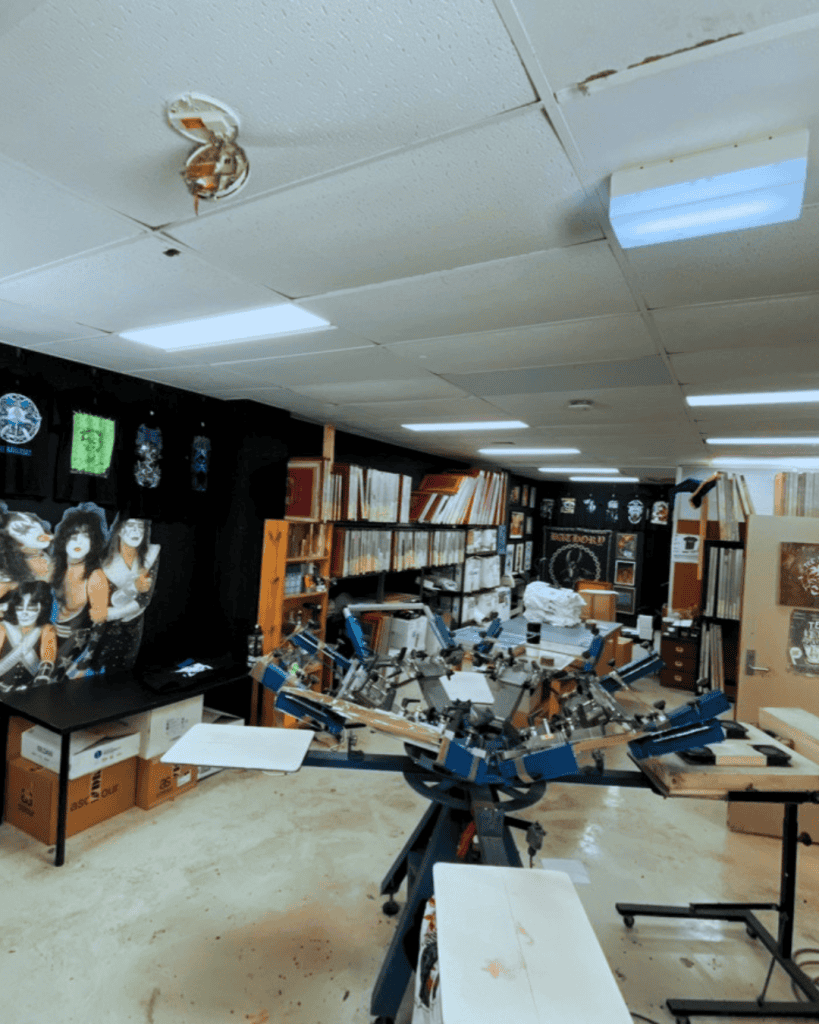
Over the last 8 and a half years, Adam has taken Tee It Up Screenprinting from rough beginnings to a warehouse in Coburg North, with an automatic press, multiple heat presses, a small team, and work going out to bands, labels, venues, and businesses across Australia.
In this Behind The Mesh feature, we get to know Adam, the story behind Tee It Up Screenprinting, and why building a shop with soul matters just as much as getting the print right.
Let’s dive in.
Follow Adam and the Tee It Up Screenprinting crew on:
Website: https://teeitupscreenprint.wixsite.com/website-1
Instagram: @teeitupscreenprinting
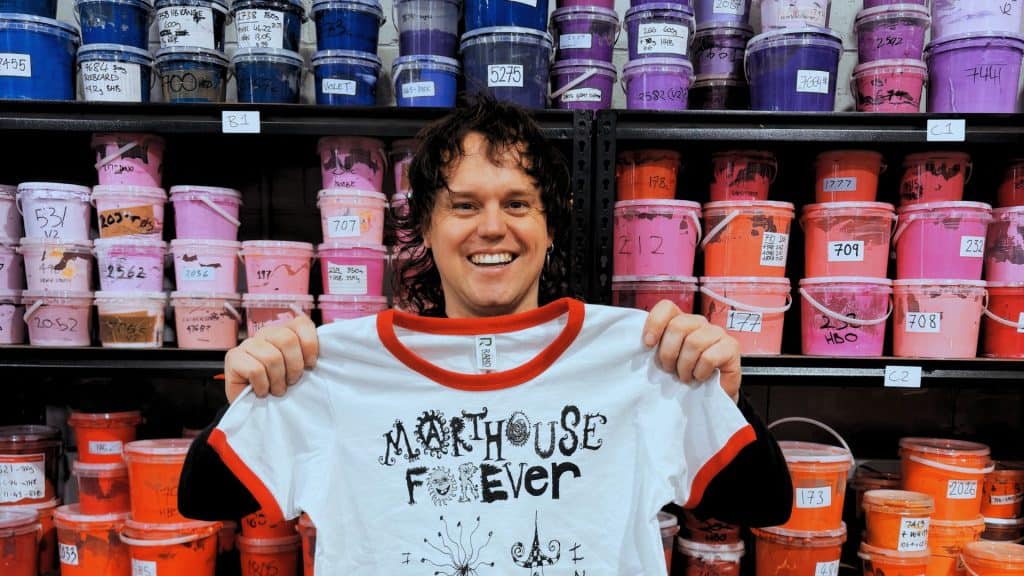
About Adam
List 3 things about yourself – fun facts, hobbies, pets or interests
- I’ve played shows with my bands in 20 different countries.
- I moved from SA to Cairns, North Queensland, when I was 8, then moved to Melbourne 15 years ago to start my Diploma in Sound Engineering. I’ve recorded over 60 bands since then.
- I’m really good at quoits, and I don’t mean quotes. I mean the game where you throw a ring onto a pole.
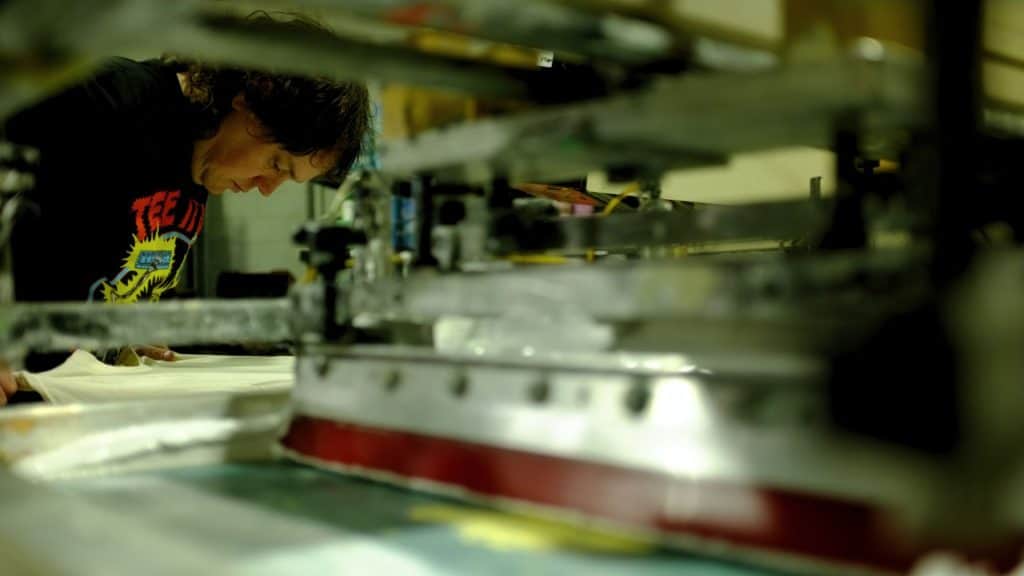
Describe your screen printing journey. How and when did you get started and what has been your biggest learning experience?
My first screenprinting experience was in photography class in high school. I still have the film for it too, definitely need to get it framed sometime.
A few of my friends in Melbourne found someone online who could supply exposed screens, so I decided to print my own merch for my now-defunct record label. That’s kind of where it all started for me.
I was on the dole for a very long time and had less than a handful of jobs under my belt: house painting, call centre work, warehousing, that kind of thing. I didn’t have many aspirations outside of playing music and recording bands, but I didn’t have the money behind me to upgrade my recording equipment.
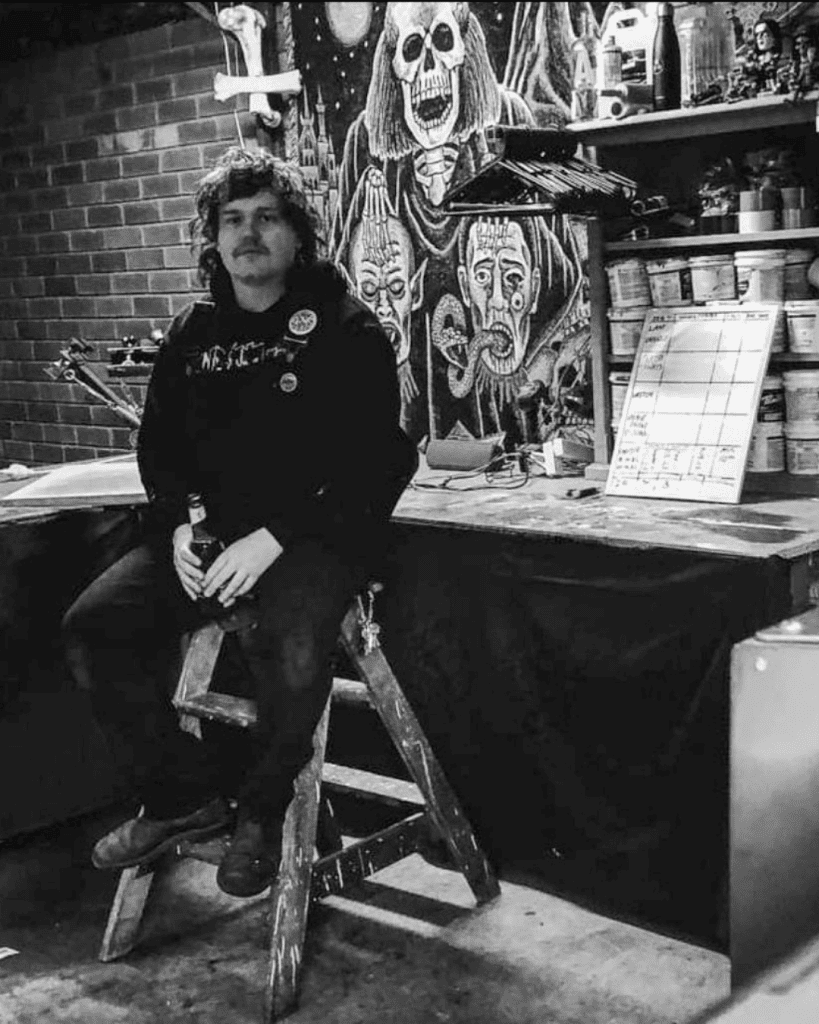
Eventually, Centrelink offered up the NEIS program, which my partner and I signed up for. I borrowed $2k off my band to buy stock, ink and screens, and started printing in my asbestos-ridden rental shed, only paying myself for the time I was actually printing.
We moved to a friend’s house in Ballarat over COVID and, because my client base was mainly bands, it really kicked off from there. Everyone was getting double dole, so a lot of people were deciding to put it into their merch.
I was able to buy a conveyor dryer and a flash. Before that, I was heat-gunning in between prints and using a heat press to cure everything.
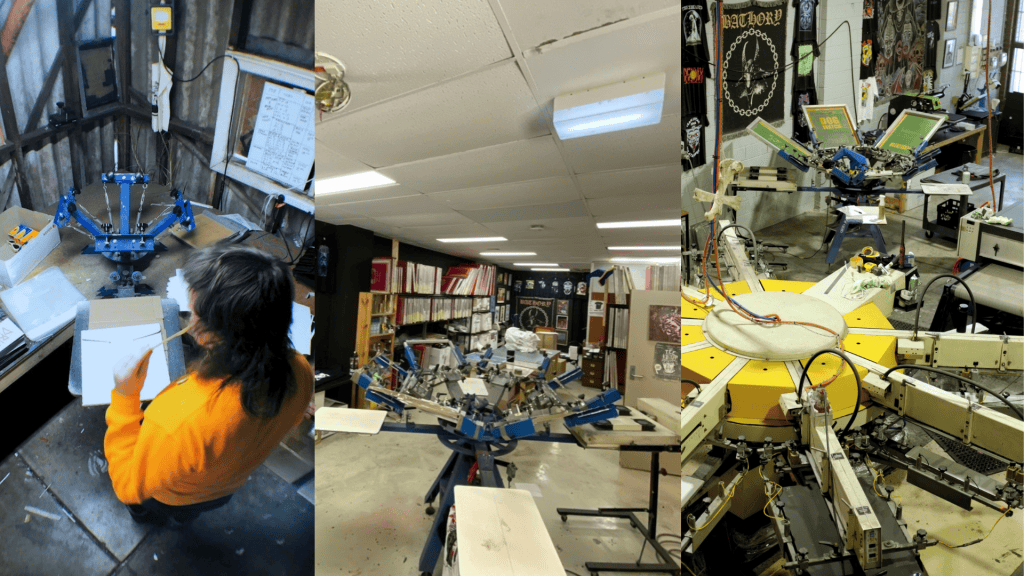
After things opened up again, I moved into Coburg Studios, a shared creative hub with over 30 or so rooms in the building. I upgraded equipment when I could and eventually was able to get a loan to buy professional equipment and hire my first employee.
Shoutout Ryan from Armslength. He gave me a wealth of knowledge. He came from the industry, so he knew how to do things in a proper production environment instead of the chaos I’d created for myself.
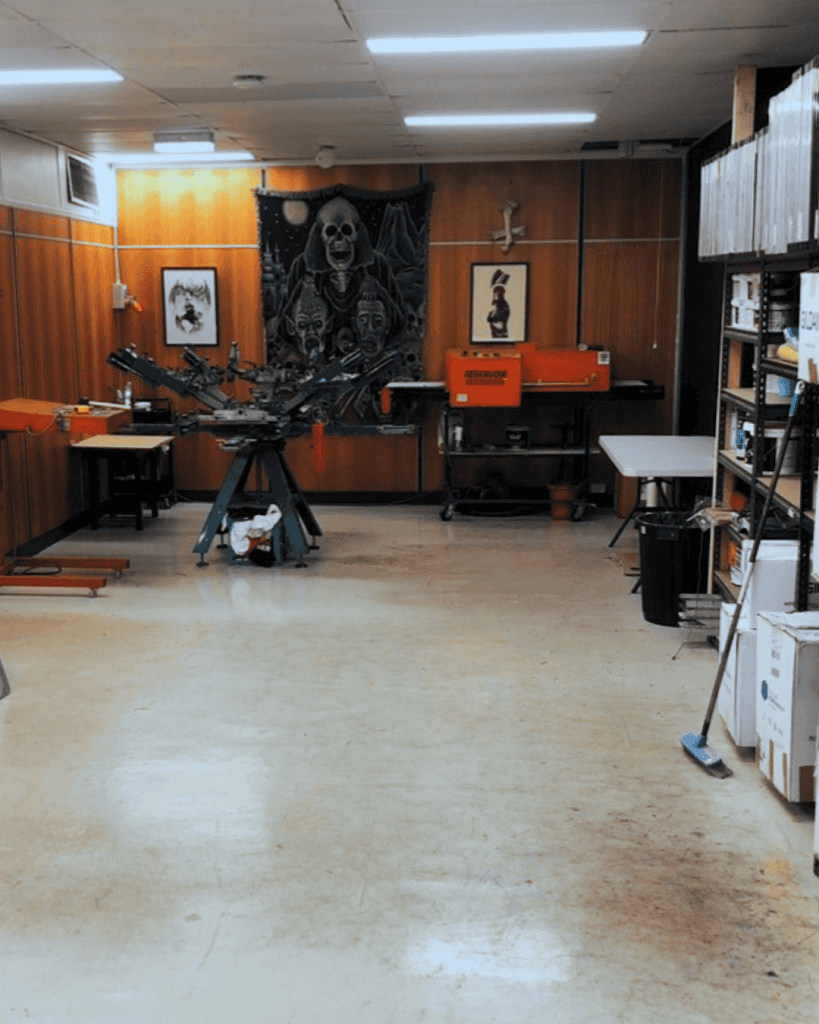
I’m now renting my own warehouse space in Coburg North and finally feel like I can be proud of what I’ve built in the last 8 and a half years
The biggest learning curve was figuring out EVERYTHING. Not having any experience in the industry led to plenty of hair-pulling moments, especially because I’ve stayed strictly water-based. A lot of the information I could find 8.5 years ago was mostly about plastisol.
I did have some help along the way, so shoutout to Stu from Gauntlet, Vincent from Dragonfly Screenprinting, Sammy and Alini from Anti Future, and of course Jones Bros. For that, I’m forever thankful.
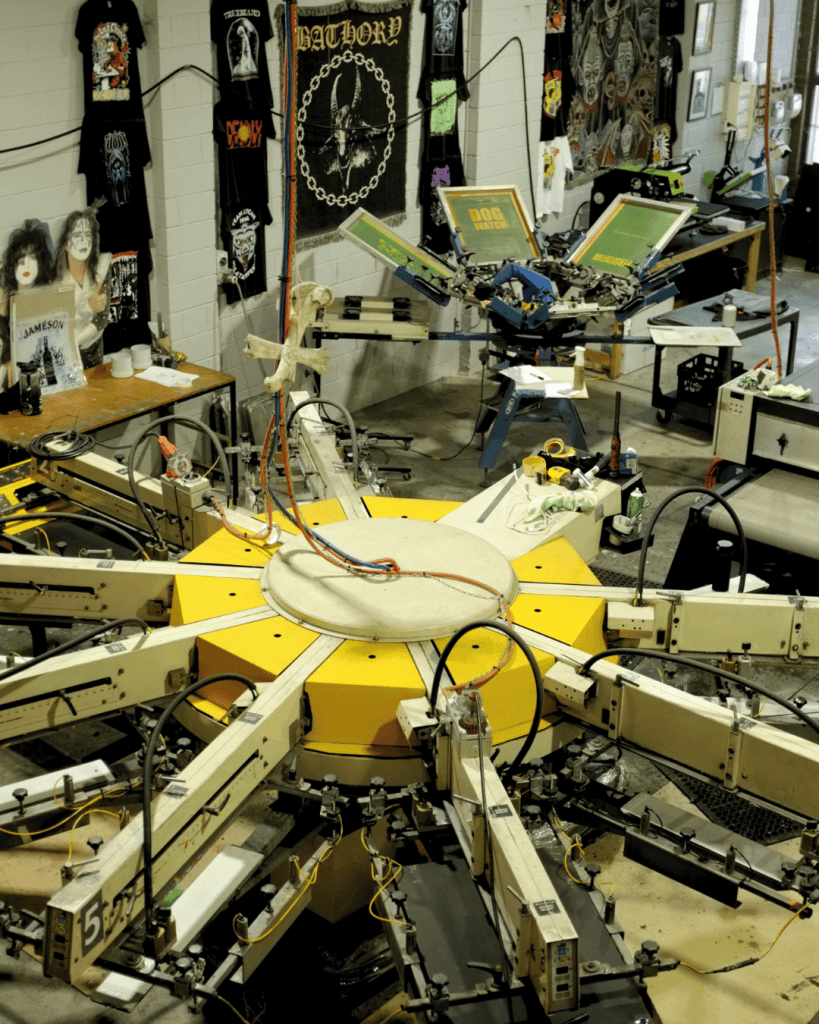
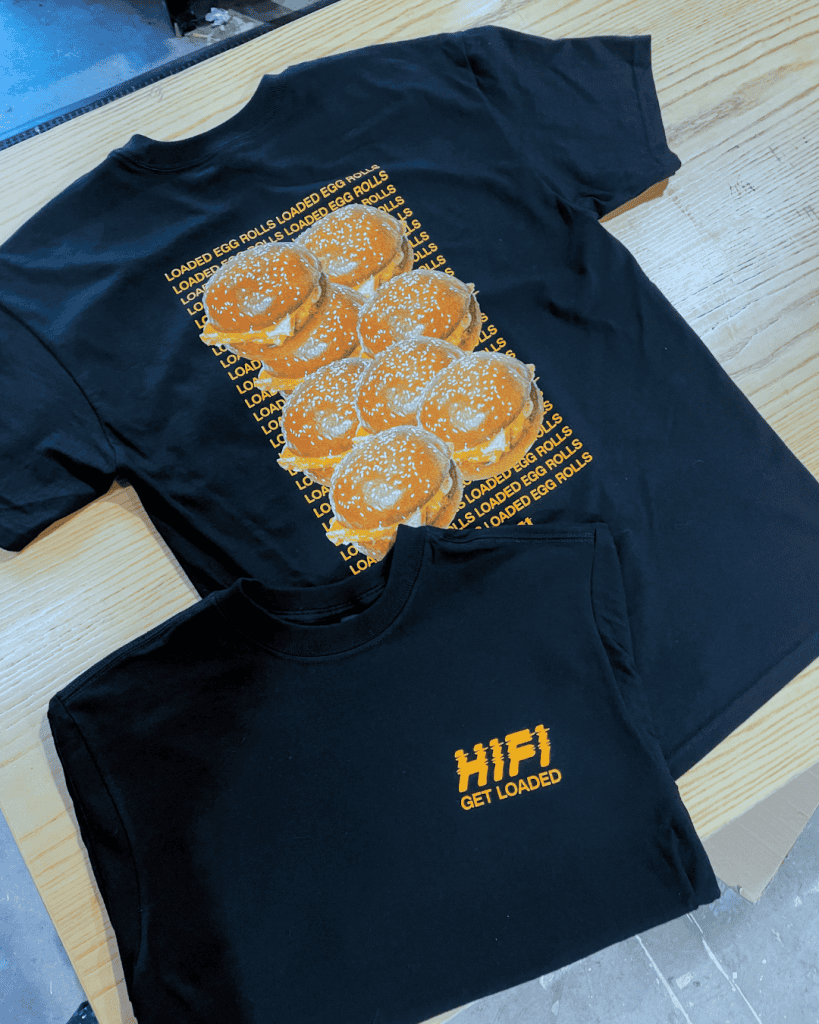
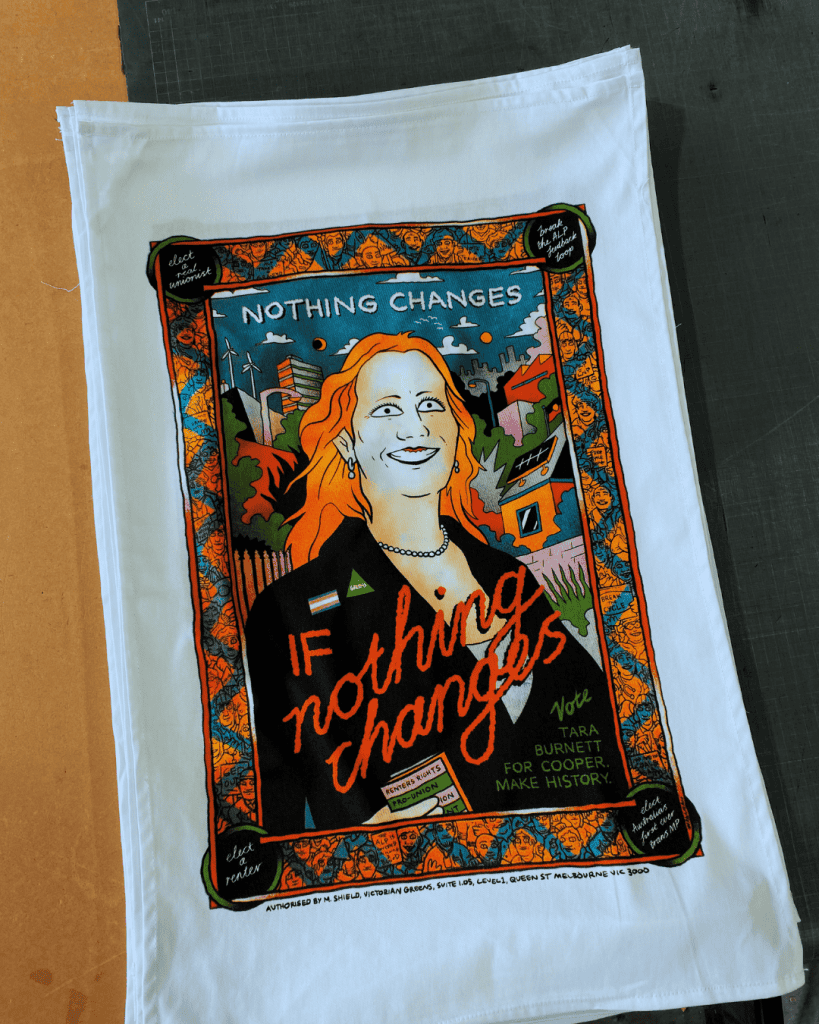
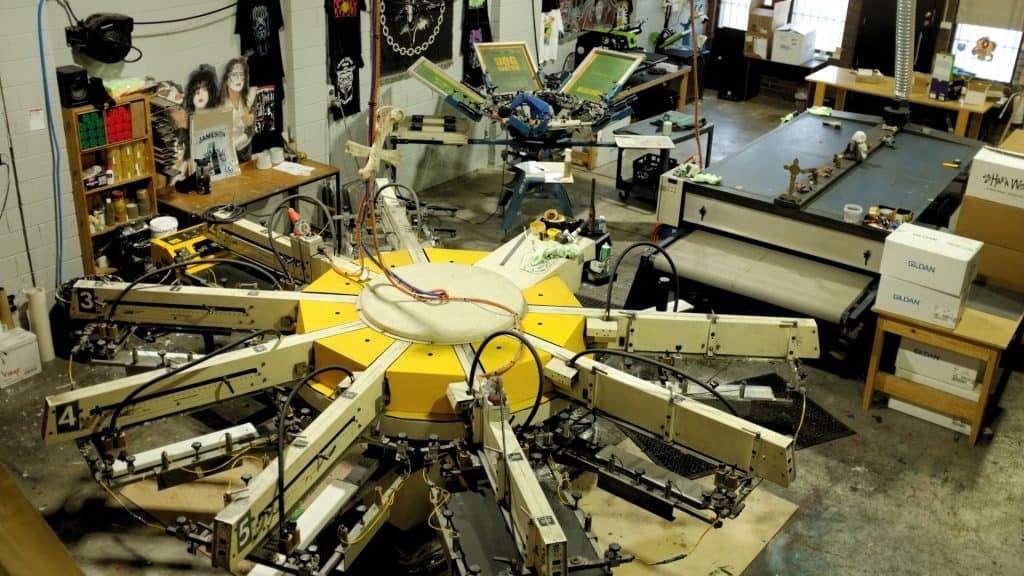
We’ve now got an automatic press, multiple heat presses and a small team, and we’re doing work for bands, labels, venues and businesses all over Australia.
Tell us about your proudest screen printing project. What made it special and what did you learn from it?
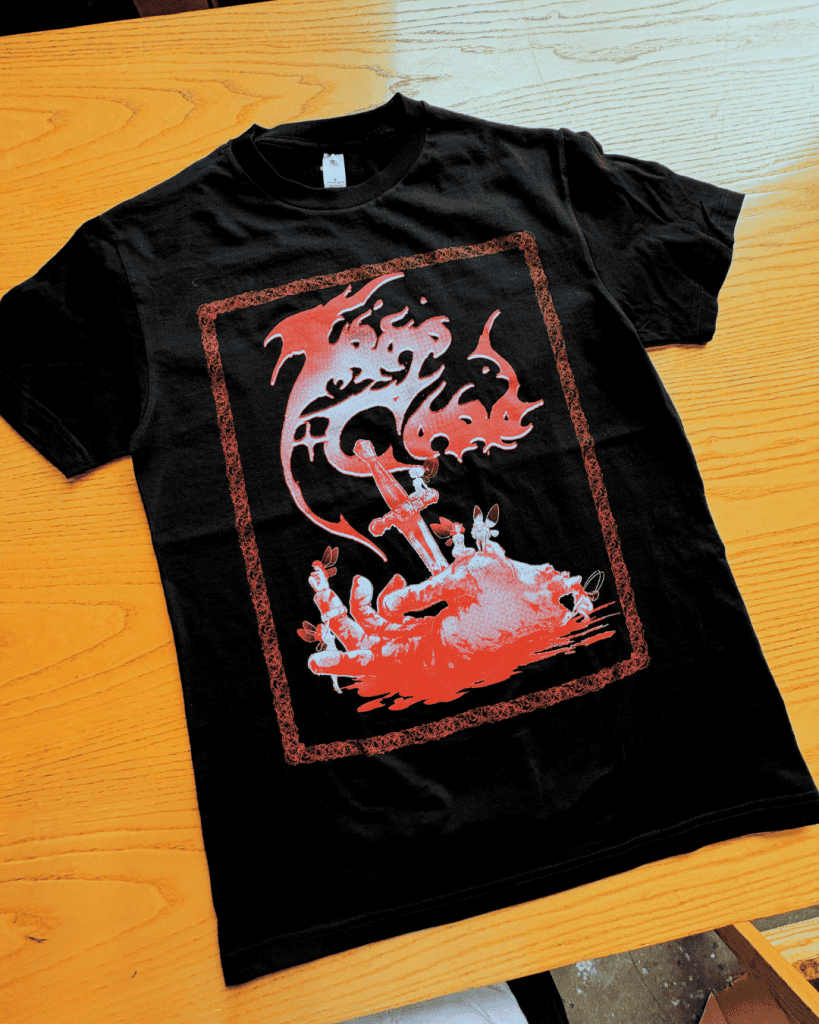
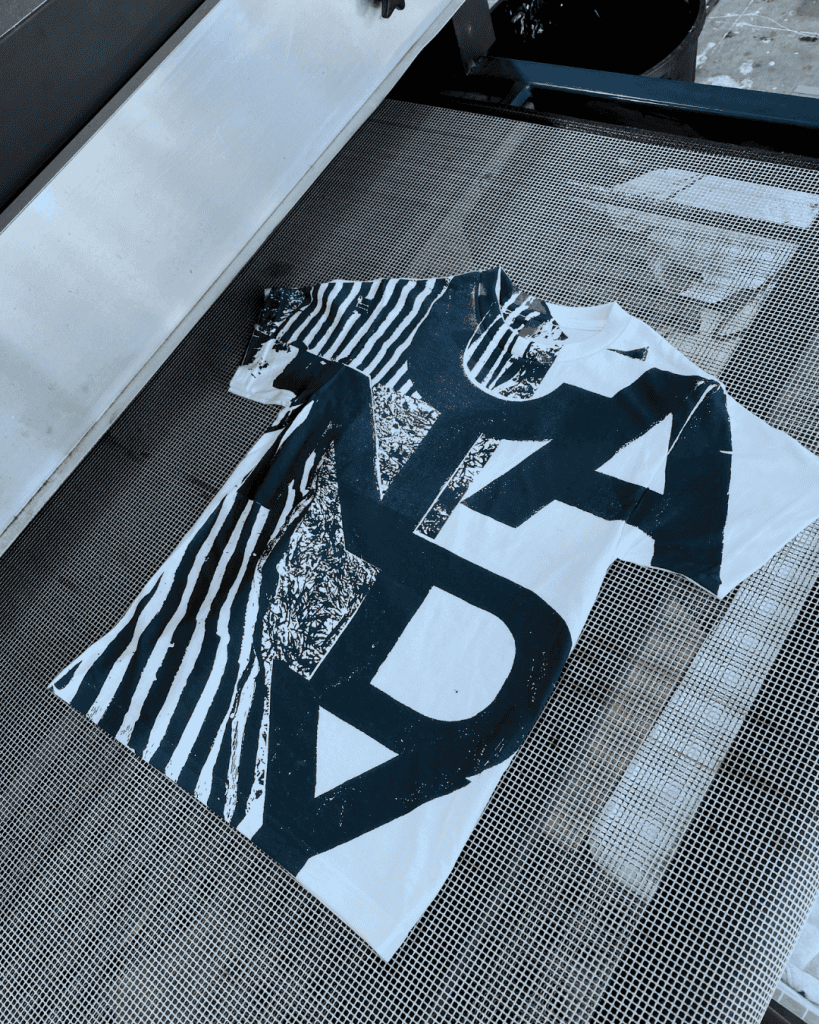
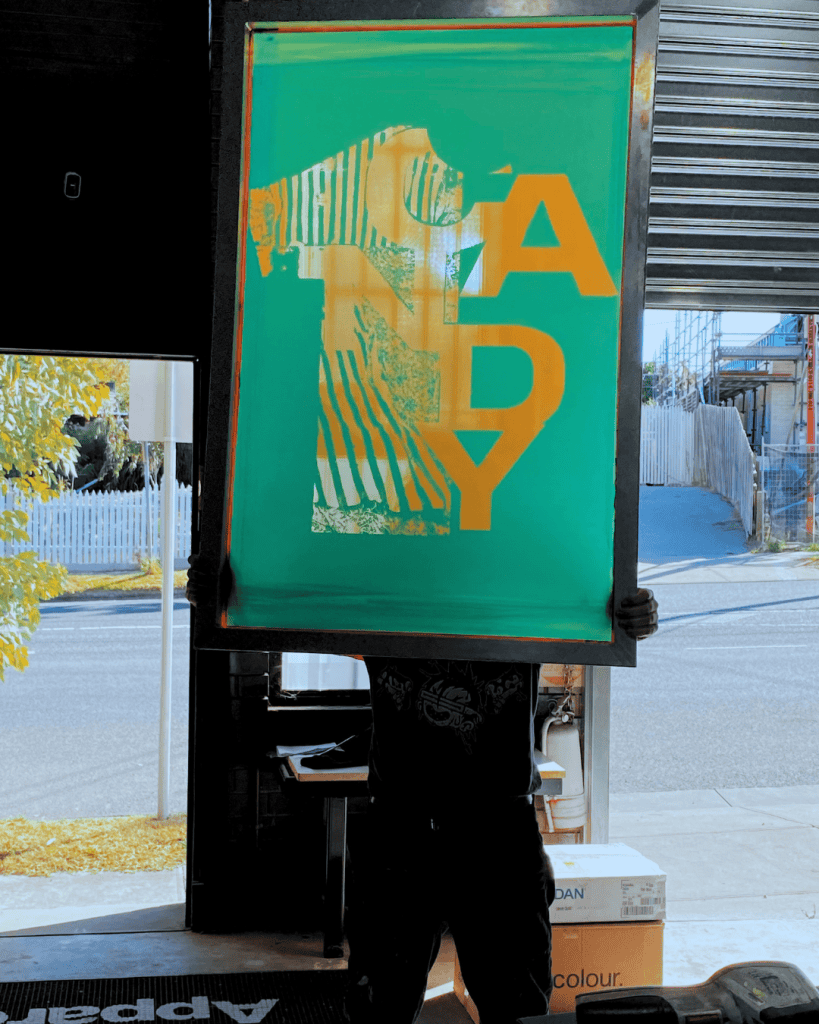
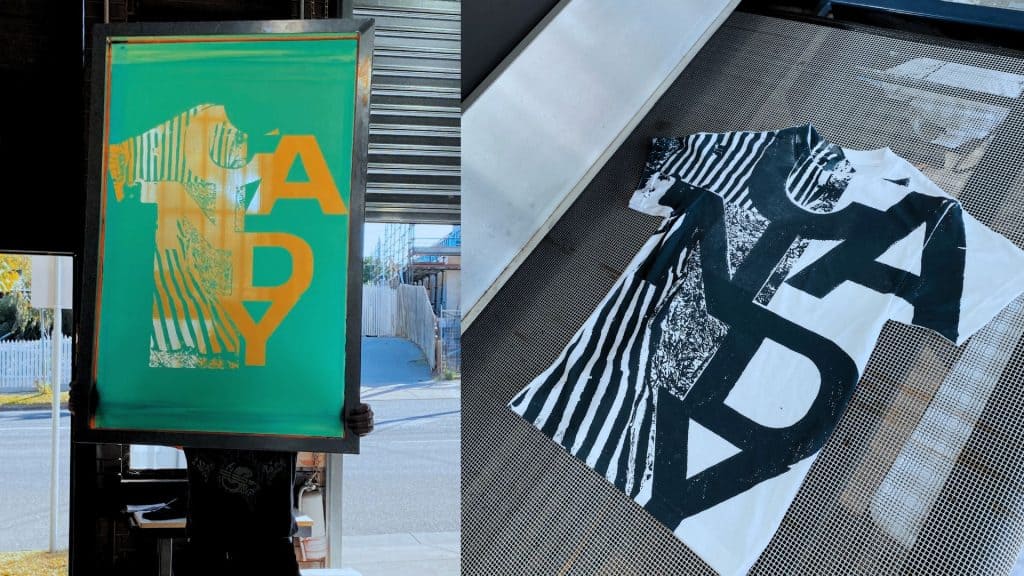
The first thing that pops to mind is when I did an all-over print for Candy. I’d always wanted to do one, but whenever I got requests for them, I’d turn them down.
I’m really into trying new things with the business and finding new ways to bring people’s ideas into reality. It breaks up the monotony and challenges me.
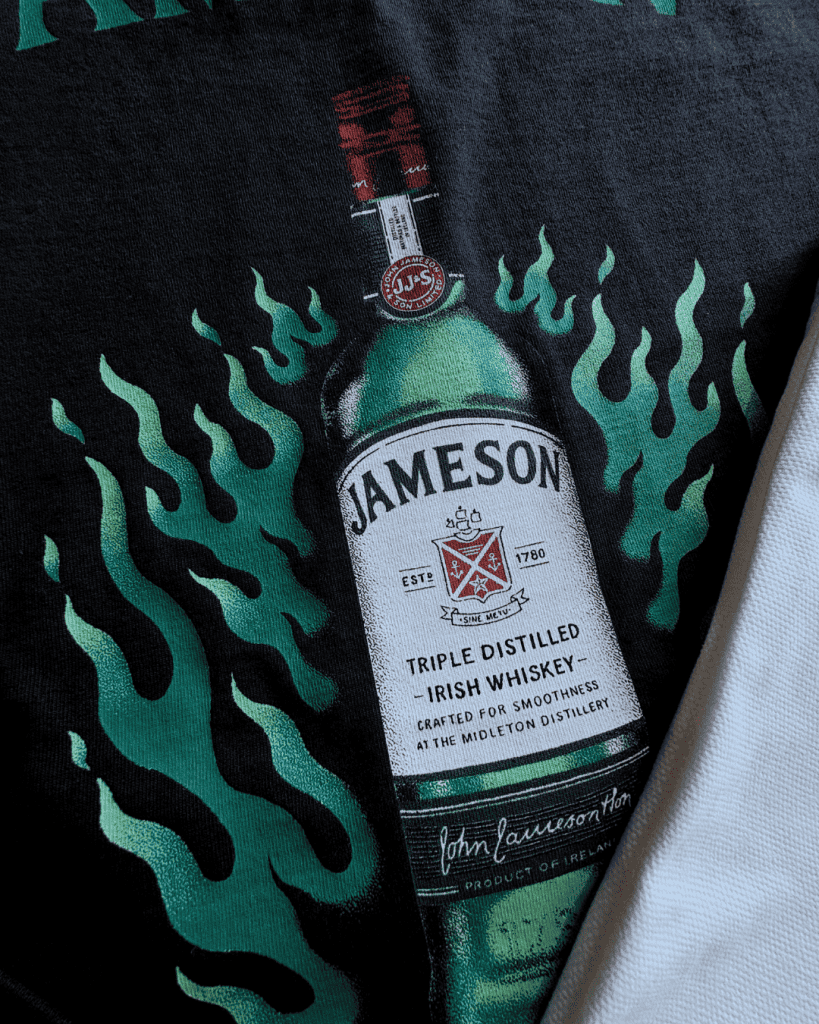
It taught me that sometimes you just have to say yes to the job and figure it out. I’d spent years avoiding all-over printing because it felt too risky, but once I actually did it, it opened up another option for what we can offer.
Industry
What are your thoughts on the current trends in screen printing? Do you see any emerging styles or techniques that excite you?
I dunno, the heavy, boxy, oversized thing has stuck around for a while, which is interesting. The problem with it is that because there’s more fabric, it costs more. I reckon eventually people will turn the other way and want the thinnest shirt around.
I’ve been experimenting with discharge inks a bit more because I love how they feel.
We’re feeding the DTF beast because we have to. I don’t hate it, but I do think it takes away from the craft a little bit. On the other hand, being able to produce something with more colours than we can screen print is great for people who want that.
What role does the online community play in your screen printing practice? How do you connect with other printers and share knowledge?
It’s pretty crucial these days. I’m not one to gatekeep, and I’ve always felt strongly about that in all aspects of my life.
There’s no use pretending I’m the best screen printer, being up myself and getting angry about people asking questions. When you’re learning things, the alternative is usually YouTube, so why not connect with other printers and build a community instead?
There’s a chat I’m involved in with heaps of printers from around Australia. It’s good for laughs and good for sharing knowledge.
Shop Floor
What is your most treasured product or piece of equipment on the floor that has made your life easier as a printer? Why?
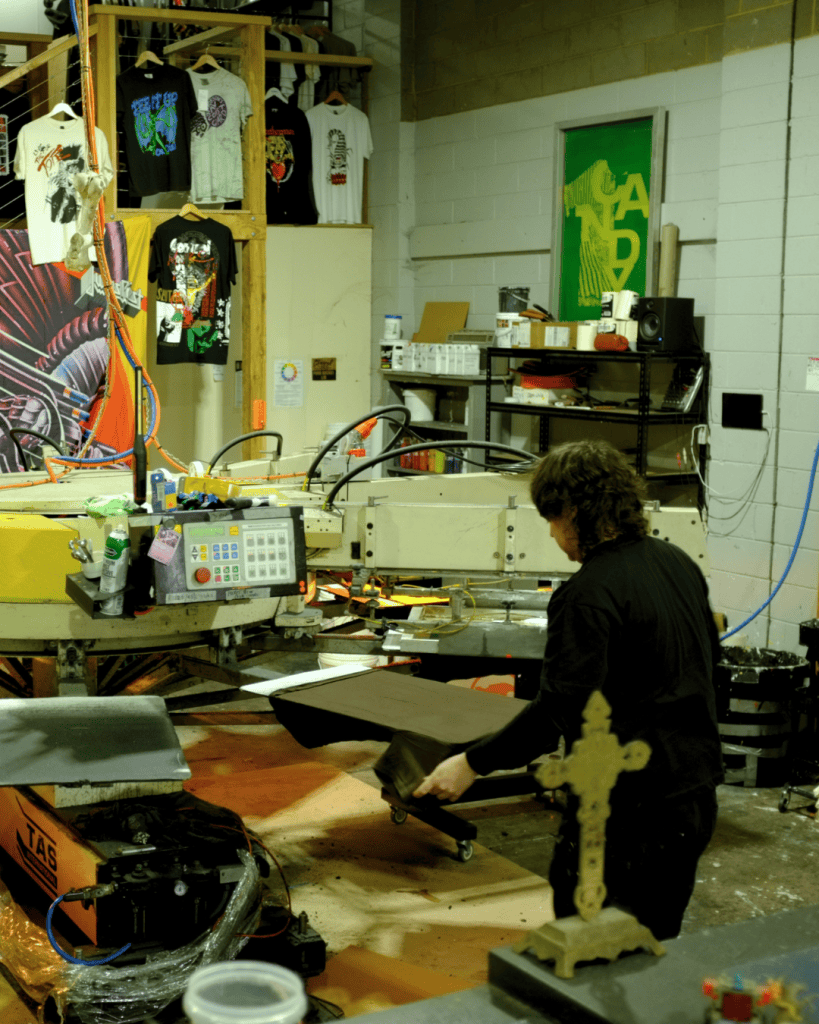
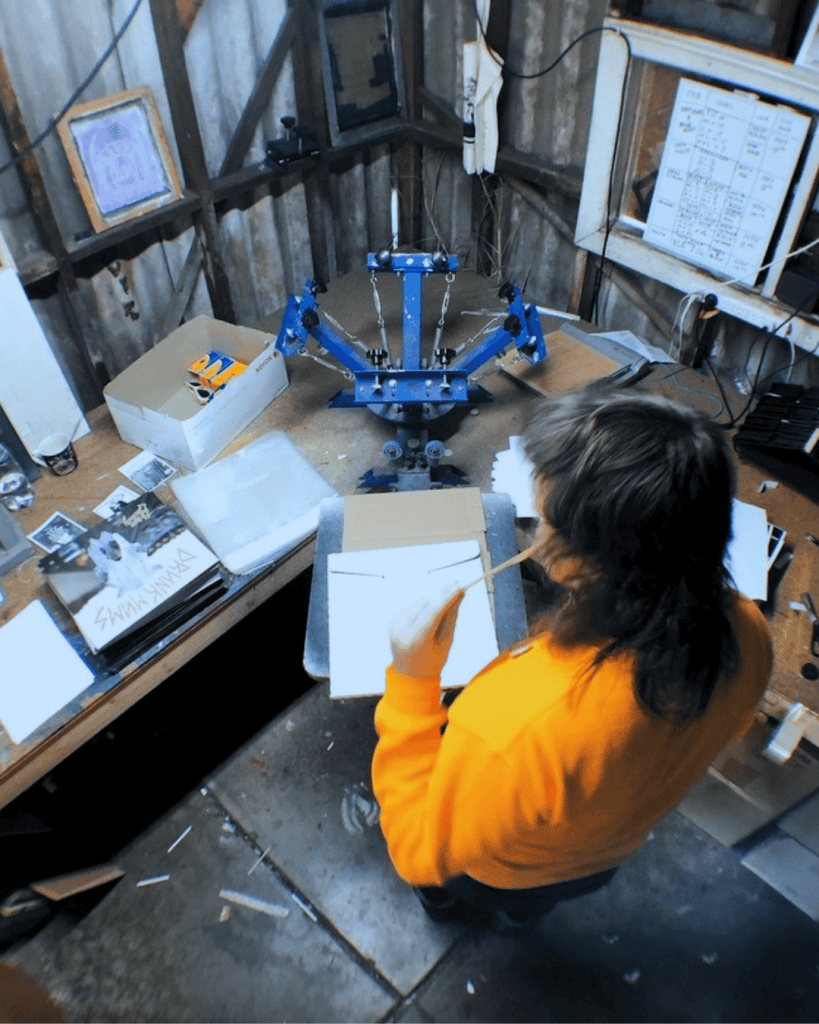
Defs my TAS auto. It’s an old one, from 2002, but it’s great.
After hand printing for seven years, as well as playing music, my body was hurting. Being able to take some of that physical strain away was essential for me to keep the business going.
Thankfully, I was able to purchase mine outright after saving up and getting half of the “Save The Tote” print run from Shane and Leanne at Last Chance Rock & Roll Bar and The Tote
What is on your wish list for your shop floor this year?
I need a new exposure unit. We’re running an Alibaba one at the moment and it’s not big enough, plus the light source is pretty weak.
We really need that emulsion to expose properly to minimise breakdown when printing with water-based ink.
Advice
What advice would you give to aspiring screen printers? What are the essential skills and qualities for success in this field?
From my experience, start by working somewhere else before starting your own.
The combination of running the back end of a business while also learning how to print, expose screens, manage stock, learn colour theory and ink mixing, manage people and everything else probably shouldn’t all be done at the same time.
Don’t overspend on equipment straight away and get yourself into debt. If you don’t have the client base, you don’t have the work to pay it off.
Be a good person. Own up to your mistakes, but don’t let them get you down.
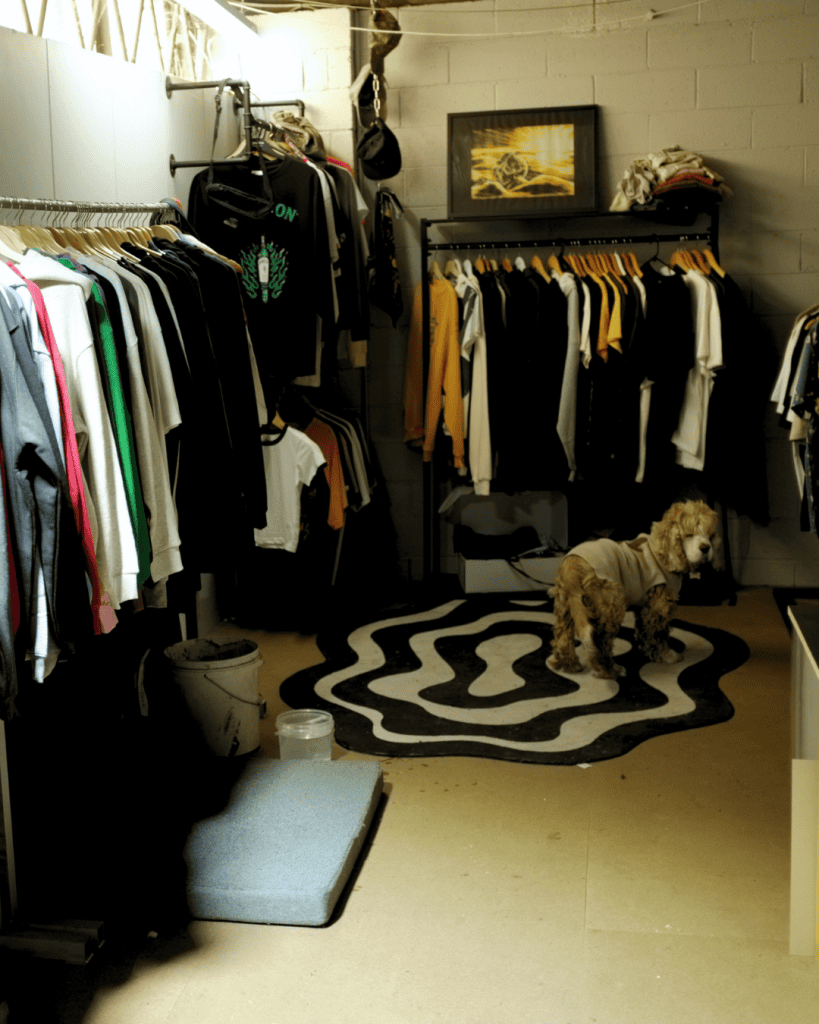
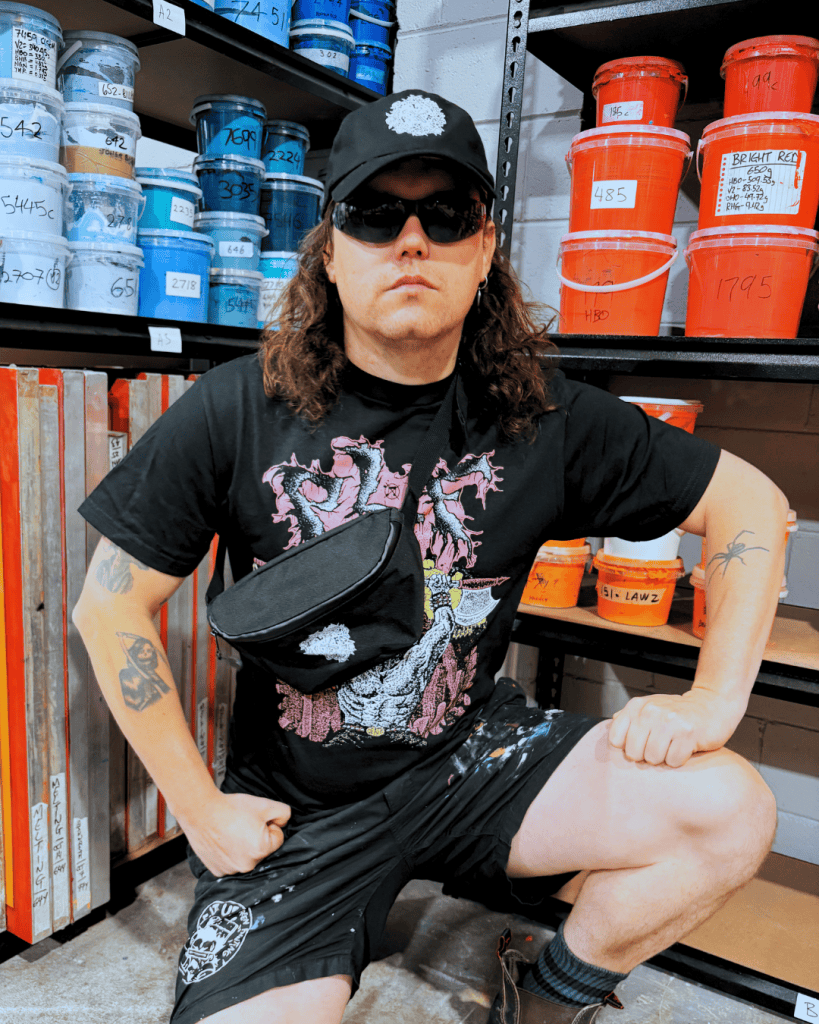
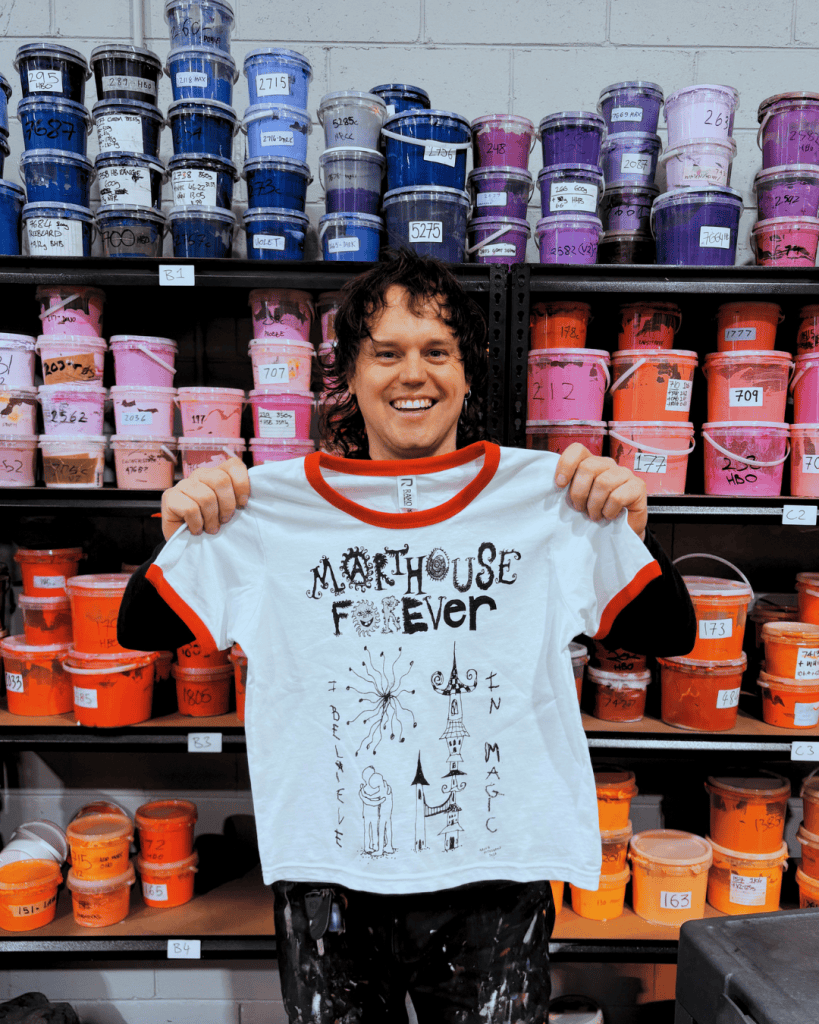
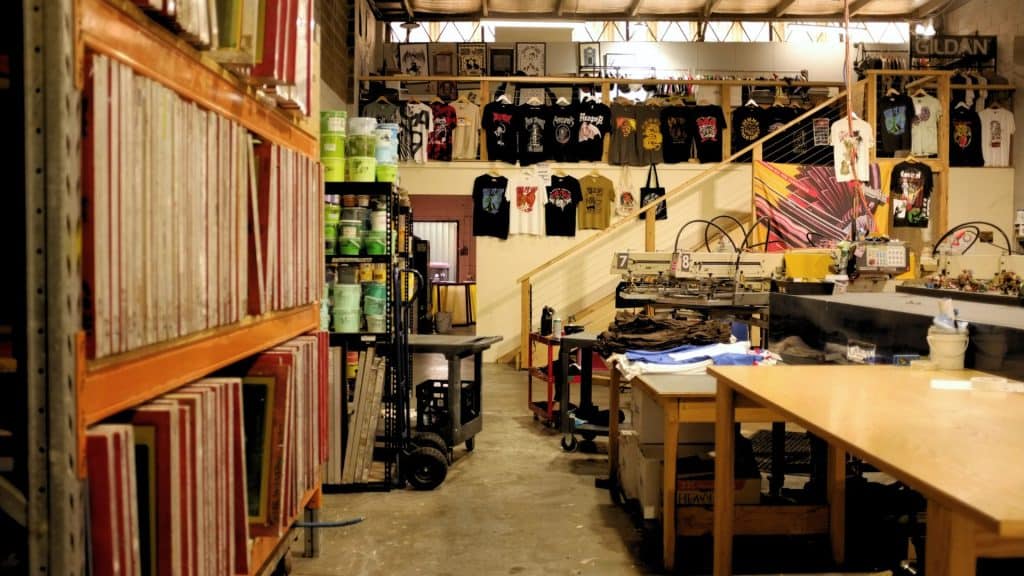
Make your shop inviting for your clients to be in. Show them that you care about art and expression. There’s nothing worse than a print shop that has no soul.
Also, don’t try to compete purely on price. There will always be someone cheaper. Give people a reason to want to work with you.
Don’t be a d**k to your employees. Remember that boss you hate? Don’t be them.
Bonus
Share a funny or unexpected mishap you’ve encountered while screen printing.
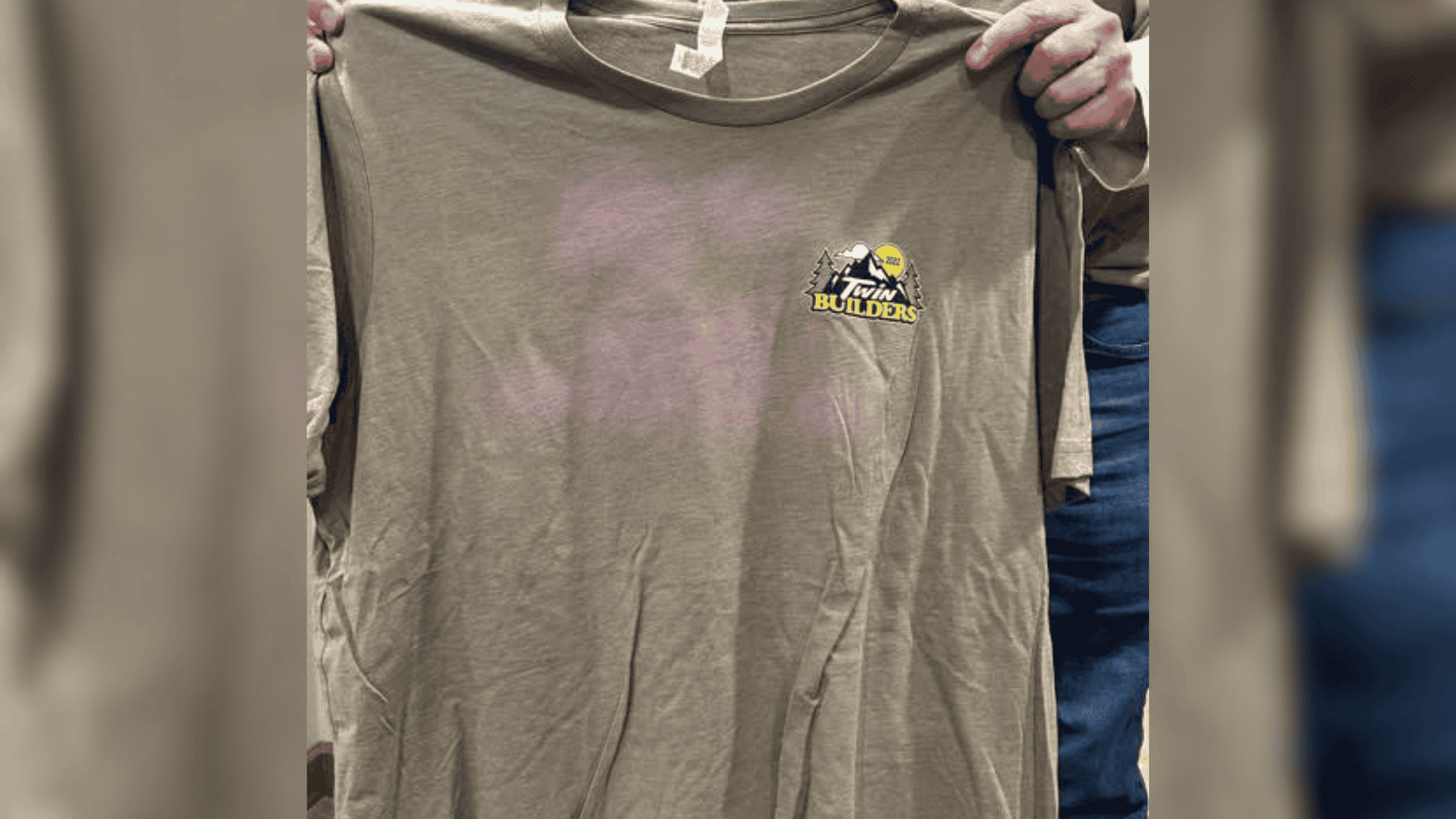
It’s not really a mishap, but when I was printing in Ballarat it snowed outside, so I got a couple of photos of the tee I was printing at the time sitting in the snow.
Oh, I guess there was also the time I accidentally exposed two completely different images onto the same screen, then went ahead and printed it for C.O.F.F.I.N before noticing. Good thing they are mates, I just gave em a credit for their next job.
What’s your go-to playlist for a productive printing session?
I generally listen to ’70s punk and rock and roll, Saints, Ramones, Kiss, Thin Lizzy and ’80s heavy metal, Judas Priest, Slayer. But if we’re really aiming for productivity, I’ll chuck on some obscure disco like Lady Evelyn Champagne King, Cerrone, Giorgio Moroder, Gino Soccio, Lime to get the butt into action.
What is the weirdest/funniest artwork you’ve had to print?
We get a lot of crazy band names coming through the shop: Scattered Limbs, Slave Birth, Skin Thief, Stupid F**k the Silly Clown, Terminal Filth, Slim Krusty, Stiff Richards and Munted Chunts.
But I once printed for a pool cleaning company called Precision Pools, and the logo kind of made it look like PP Pools…
Conclusion
Adam’s story is a reminder that not every print shop is built cleanly.
Some are built through trial and error.
Some are built through necessity.
Some are built between band rehearsals, borrowed money, second-hand gear, late nights, and a lot of mistakes.
But that’s often where the good stuff comes from.
Tee It Up Screenprinting wasn’t built by chasing the cheapest price or pretending everything was perfect. It was built through community, persistence, honesty, and a genuine care for art, expression, and the people behind the work.
Because printing is only part of the job.
The shop itself matters.
The people matter.
The culture matters.
And as Adam puts it, there’s nothing worse than a print shop with no soul.
That’s what sits behind the mesh.