YOU SEND
THE JOB DETAILS.
Give us the information that defines what you're trying to print.
- Artwork file
- Finished artwork size
- Substrate + ink system
- Screen or mesh details, if known
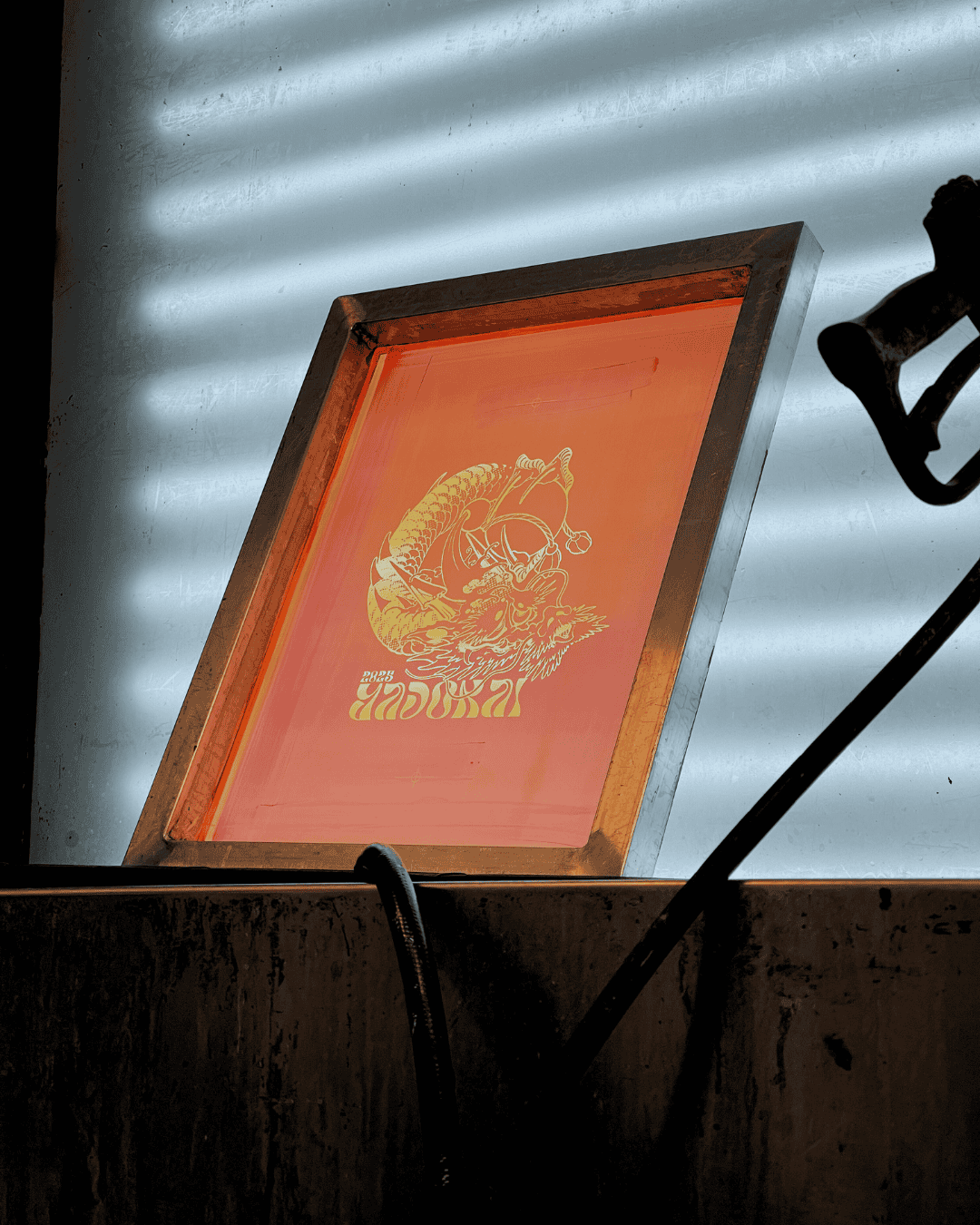
Need a screen exposed, a screen burned or a screen printing stencil created? Send us your artwork and tell us what you're printing. We prepare clean, ready-to-print screens using traditional film exposure or direct-to-screen imaging, with screen and mesh guidance when you need it.
Not sure about screen size, mesh count or exposure method? Start with your artwork and print details. We'll help work out the rest.
Enter your finished artwork dimensions and we'll show you which standard screen size gives your design enough room for exposure and printing.
Our screen exposure and screen burning service is built for anyone who needs a clean, accurate screen printing stencil. From one exposed screen for an artwork project to repeat screens prepared for ongoing production, we can scale the service around the way you print.
Most exposure customers use a Size 2 or Size 3. Enter your finished artwork size or select a standard frame below to see how it fits.
You don't need every technical detail worked out before getting in touch. Send us the job information you know and we'll take it from there.
Give us the information that defines what you're trying to print.
We'll review the job and confirm what the screen requires.
Vector artwork is ideal, but don't panic if your artwork isn't vector. High-quality raster artwork can work too.
Vector artwork gives us the cleanest path to output and can be resized without losing edge quality.
JPG, PNG, TIFF and PSD should be supplied at final 1:1 print size wherever possible at approximately 300dpi.
Each print colour normally requires its own screen. If you're unsure, send the artwork and we'll help.
From artwork through to a finished screen, here's what happens with your exposure job.
Artwork, finished size and print details.
We confirm screen size, mesh and Film or DTS.
Confirm size, placement and job details.
Screen is prepared, exposed and developed.
We contact you once the job is complete.
Collect from Campbellfield or arrange delivery.
Send us your artwork, finished size and basic print details. If you're unsure about screen size, mesh or exposure method, we'll help you work it out.
Screen exposure, screen burning, stencil creation — different printers use different terms. We've answered the common questions here so you can dig into the detail only when you need it.
Screen exposure — also commonly called screen burning — is the process used to create the stencil on a screen printing screen.
Artwork is transferred to an emulsion-coated screen using controlled light exposure. The screen is then washed out so the image area opens in the stencil, allowing ink to pass through the mesh during printing.
Yes. Our professional screen exposure service can take your supplied artwork through to an exposed screen ready for your print job.
Send us the artwork, finished image size and whatever you know about the job. If you aren't sure which screen size, mesh count or exposure method you need, we can help work through those details with you.
A screen printing stencil is the image created in the emulsion on the mesh. The open areas of the stencil allow ink to pass through the screen, while the surrounding emulsion blocks the ink.
Screen exposure is the stage that turns your artwork into that printable stencil.
Film exposure uses a film positive placed against the emulsion-coated screen before exposure. Direct-to-screen (DTS) digitally images the artwork onto the coated screen without using a separate film positive.
DTS removes the film-positive stage and its associated film stretch and alignment variables. Film exposure remains a practical option for many screen printing jobs. We'll help determine which method suits the screen and artwork you're supplying.
For the cleanest screen exposure workflow, supply your artwork as Adobe Illustrator artwork, vector PDF or SVG wherever possible. Fonts should be converted to shapes and each screen colour should be supplied clearly.
Include the finished artwork size in millimetres. If you're unsure whether the file is suitable for screen burning or stencil creation, send us what you have and we'll review it before proceeding.
Start with the finished width and height of your artwork . Our Screen Size Finder compares those dimensions with the clear mesh opening of our standard screen printing frames and shows you a suitable starting point.
The clear mesh opening is a physical size guide rather than a guaranteed maximum printable area. We'll confirm final screen suitability before exposure.
Mesh selection depends on the artwork, ink system, substrate and level of detail required. There isn't one mesh count that suits every screen exposure job.
Tell us what you're printing, the ink you're using and the artwork requirements. If you don't already know the mesh count, we'll help you choose an appropriate screen and mesh setup.
Absolutely. Screen exposure isn't limited to production quantities. We work with one-off projects as well as repeat screen exposure for growing print shops, production printers, education, label and industrial printing applications.
Yes. Jones Brothers provides professional screen exposure and screen burning from our Campbellfield workshop in Melbourne, Victoria.
We work with Melbourne printers as well as customers sending screen work to us from elsewhere in Australia.
Yes. We can expose individual screens or support repeat production where the same artwork and screen requirements are used regularly.
For ongoing work, consistent artwork, screen specifications and preparation can make repeat screen exposure and stencil creation much easier to manage.
LOOKING FOR SCREEN EXPOSURES?