Jones Brothers Printechnology

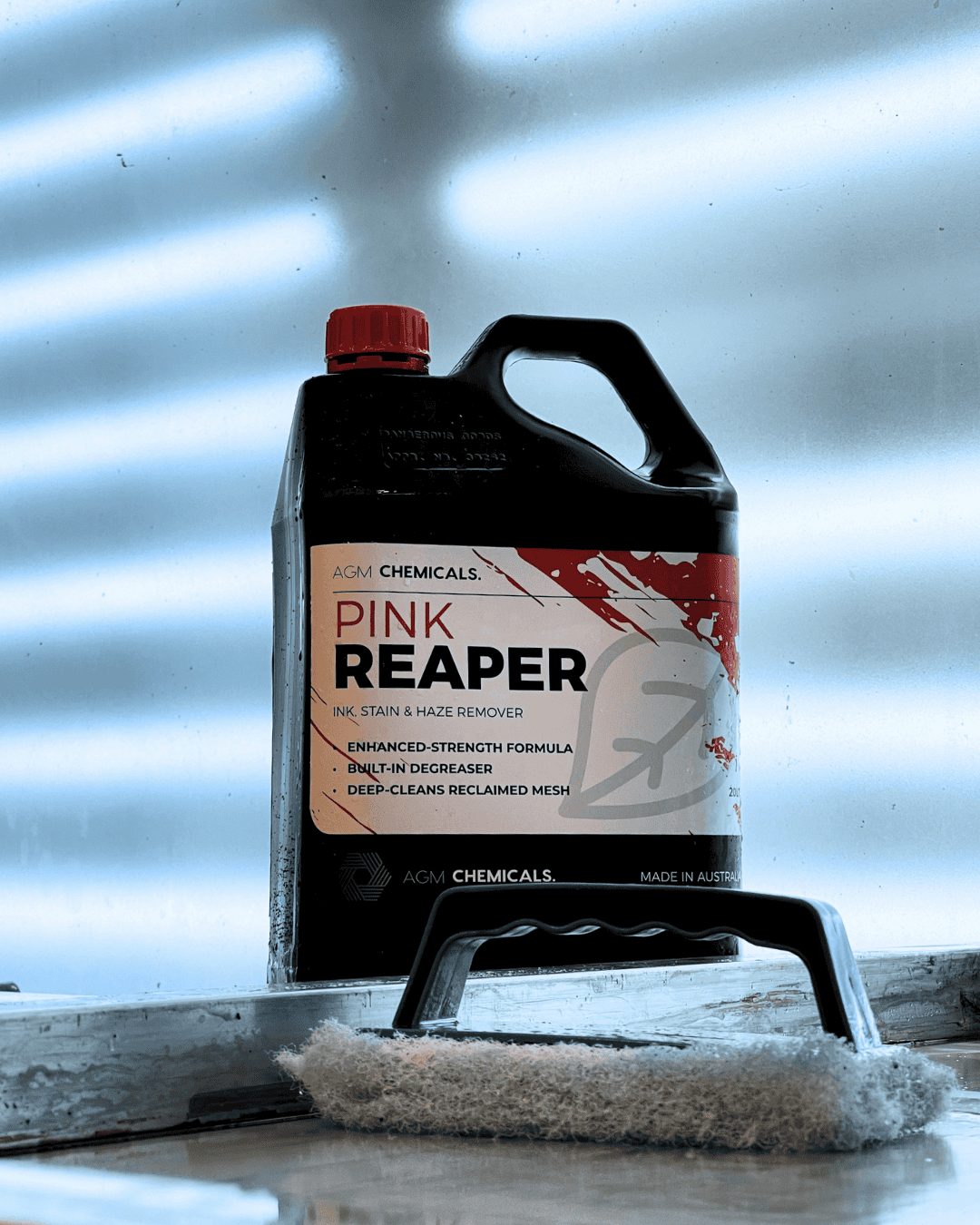
AGM CHEMICALS – PINK REAPER

AGM CHEMICALS – PINK REAPER

AGM Pink Reaper is a fast-working, ready-to-use ink, stain and haze remover with a built-in degreaser, developed for reclaimed screen-printing mesh. Used after stencil removal, it helps remove residual ink, staining, haze, oils and contamination—giving screens a more complete reset before they’re re-coated and returned to production.

100% Australian made.

How to Order

Give us a call or send us an email and we can process your order.

Have more questions? No problem! lets have a chat.

Email: info@jonespt.com.au 
Call: +613 9357 5767

Description

AGM Pink Reaper – Post-Strip Ink, Stain & Haze Remover with Built-In Degreaser

AGM Pink Reaper is a high-performance, ready-to-use post-strip cleaner developed specifically for reclaimed screen-printing mesh. Designed for the final stages of the reclaim process, it helps remove residual ink, staining and haze that can remain after the stencil has been stripped.

Unlike a standard ink remover, Pink Reaper also incorporates a built-in degreaser, helping remove residual oils and contamination from the mesh at the same time. This gives the screen a more complete reset before it moves back into production and is re-coated with emulsion.

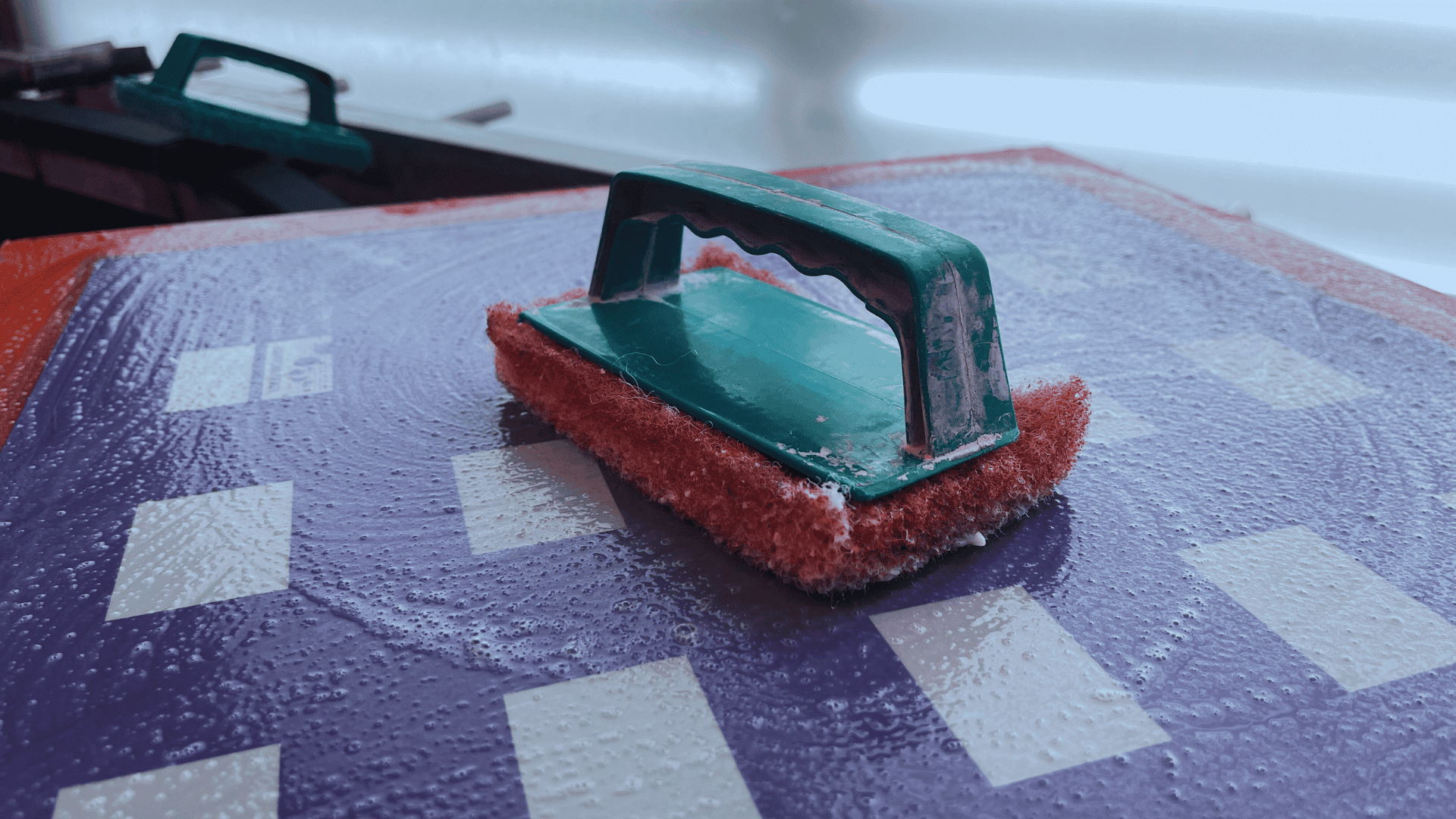
Pink Reaper is supplied ready to use, with no additional mixing or dilution required. Once the stencil has been completely removed, rinse the screen with water, apply Pink Reaper to the affected area and scrub both sides of the mesh in circular motions. Allow it to work for 3–5 minutes, then pressure wash both sides of the screen. For stubborn staining or haze, the process can be repeated.

Purpose-built for professional screen rooms, Pink Reaper provides a dedicated post-strip cleaning stage for screens that need more than a standard reclaim before being returned to production.

Key Benefits:

  • Helps remove residual ink, staining and haze from reclaimed screen-printing mesh
  • Built-in degreaser helps remove residual oils and contamination
  • Ready-to-use formula — no on-site mixing or dilution required
  • Fast-working 3–5 minute dwell time
  • Designed to integrate directly into the post-strip reclaim workflow
  • Helps provide a more complete screen reset before re-coating
  • Purpose-built for industrial and professional screen-printing environments
  • 100% Australian made, as highlighted in the technical data sheet

For safe handling, Pink Reaper should be used with chemical-resistant gloves, protective clothing and suitable eye/face protection in a well-ventilated area. Always consult the current Safety Data Sheet before use.

For more information:
AGM Pink Reaper – Technical Data Sheet

Additional information

Weight 20 kg
Dimensions 28 × 28 × 38 cm

Reviews

There are no reviews yet.

Be the first to review “AGM CHEMICALS – PINK REAPER”

Your email address will not be published. Required fields are marked *

WHY AGM CHEMICALS?

CHEMISTRY BUILT
FOR THE SCREEN ROOM.

AGM Chemicals takes a practical approach to screen room chemistry — combining performance, responsible formulation and the realities of day-to-day production.

Screen printing screen being cleaned with AGM chemistry 01
RESPONSIBLE FORMULATION

ECO-FIRST
FORMULATIONS

Low-VOC, biodegradable formulas developed with the print room and environmental impact in mind.

Screen printing screen room chemistry being tested 02
BUILT FOR PRODUCTION

PERFORMANCE BACKED
BY TESTING

Tested to tackle the inks screen printers deal with every day, including plastisol, water-based, UV and discharge systems.

Screen cleaning in a professional screen printing washout room 03
BETTER WORK ENVIRONMENTS

SAFER SHOPS.
BETTER WORK CULTURE.

A cleaner approach to chemistry that helps reduce reliance on unnecessarily harsh products in the print room.

BETTER CHEMISTRY SHOULD STILL GET THE JOB DONE.

AGM is built around that balance — practical screen room performance without treating harsh chemistry as the default.

AGM CHEMICALS RANGE

WASH. STRIP.
DEHAZE.

Build the washroom around the job in front of you. Remove ink, strip the stencil, then tackle whatever staining and haze is left behind.

01 SCREEN WASH 02 STRIP 03 DEHAZE
01 · SCREEN WASH 01 AGM Green Citrus Wash
SCREENWASH + INK DEGRADER

GREEN CITRUS WASH

Citrus-powered cleaning chemistry.

Low-VOC, biodegradable screenwash for everyday clean-up and ink breakdown.

BUILT FOR
Plastisol · UV · Solvent inks · Routine screen cleaning
01 · SCREEN WASH 01 AGM Green Eco Wash
EVERYDAY SCREENWASH

GREEN ECO WASH

The everyday all-rounder.

Versatile screenwash for colour changes, post-print cleaning and everyday production.

BUILT FOR
Plastisol · Water-based · UV · Solvent inks · On-press cleaning
02 · STRIP 02 AGM Golden Stripper
INK + EMULSION REMOVAL

GOLDEN STRIPPER

The reclaim-room heavy lifter.

Concentrated reclaim chemistry designed to break down stencil and residual ink.

WORKFLOW
Dilute 1:5 for dip-tank use · Soak · Pressure wash · Reclaim
03 · DEHAZE 03 AGM Pink Reaper
STAIN + HAZE REMOVAL

PINK REAPER

Tough on haze. Smarter on screen prep.

A 2-in-1 haze and stain remover with a built-in degreaser to streamline your reclaim workflow.

BUILT FOR
Haze · Ghosting · Ink staining · Built-in degreasing
NOT SURE WHICH ONE?

BUILD THE RIGHT WASHROOM WORKFLOW.

ASK JONES BROTHERS →
SCREEN PRINTING · CLEANING FAQ

SCREEN CLEANING?
LET'S CLEAR IT UP.

Not sure which screen wash, ink remover or reclaiming chemical you need? Start with the job: clean ink, strip emulsion or remove haze. These answers cover plastisol, water-based, UV and solvent inks, plus the final screen prep.

NEED A PRODUCT RECOMMENDATION?

TELL US WHAT YOU'RE TRYING TO CLEAN.

ASK JONES BROTHERS

01 / Cleaning ink SCREEN WASH & PRESS CLEANING

01 How do you clean a screen printing screen after printing?

First, scrape excess ink back into its container. Then use a screen wash or ink remover compatible with your ink system to clean what remains on the mesh.

If you want to keep the existing stencil, clean the ink without using an emulsion remover. If you are reclaiming the screen for new artwork, remove the ink first, then strip the emulsion and deal with any remaining haze.

START HERE: For everyday ink clean-up, see AGM Green Eco Wash or AGM Green Citrus Wash.
02 What is the difference between screen wash, press wash and ink remover?

Screen wash or ink wash is a general term for chemistry used to remove ink from screen-printing mesh. A press wash is chosen for cleaning during printing or colour changes while keeping the stencil intact. An ink degrader is typically used for more thorough post-print or reclaim cleaning.

Some products suit more than one stage, but application method and compatibility still matter. For example, AGM Green Eco Wash is intended for on-press colour changes and post-print cleaning; AGM Green Citrus Wash is suited to everyday cleaning and ink breakdown.

IMPORTANT: Screen wash is not the same as an emulsion remover or a haze remover. Choose the cleaner for the job, not just the name.
03 What is the best way to clean plastisol ink off a screen?

Plastisol ink does not air-dry like water-based ink, but it still needs proper clean-up. Scrape away as much excess ink as possible, then use a compatible plastisol screen wash to break down the residue and wipe the mesh clean.

For plastisol clean-up, AGM Green Citrus Wash is a strong option. AGM Green Eco Wash is another choice when you want a cleaner for press-side colour changes as well as post-print washing.

BEST FIT: Plastisol ink clean-up → Green Citrus Wash or Green Eco Wash. Follow the product instructions and test on your stencil if it will be reused.
04 How do you remove water-based ink from a screen printing screen?

Clean water-based ink before it dries in the mesh. Remove excess ink promptly and use the cleaning method recommended for your ink system. Water can help with fresh ink, but a compatible screen wash may be needed for pigment and binder residue.

AGM Green Eco Wash is formulated for water-based ink as well as plastisol, UV and solvent-based systems. It is suitable for everyday screen cleaning and post-run clean-up.

PRINT SHOP TIP: Water-based ink can become harder to remove as moisture evaporates. Do not leave the screen sitting with ink drying in the image area.
05 Can I clean a silk screen without removing the emulsion?

Yes. If you plan to reuse the same artwork, you can clean ink from a screen-printing or silk-screen stencil using a compatible on-press cleaner or screen wash.

Avoid stencil strippers such as AGM Golden Stripper until you actually want to reclaim the screen. Always test any new wash on the emulsion and ink system you are using, especially with delicate or partially worn stencils.

KEEPING THE STENCIL? Choose an ink cleaner for on-press or post-print use. Do not move to the emulsion-removal stage.

02 / Reclaiming screens EMULSION, HAZE & MESH PREP

06 How do you remove emulsion from a screen printing screen?

To reclaim a screen for a new design, remove the remaining ink first. Next, use a compatible emulsion remover (also called a stencil stripper or screen reclaimer) to break down the old stencil, then rinse it away according to the product instructions.

AGM Golden Stripper is formulated to remove emulsion and residual ink. For dip-tank use, the recommended dilution is 1 part Golden Stripper to 5 parts water. It can also be applied as a diluted spray where appropriate.

RECLAIM ORDER: Remove ink → strip emulsion → inspect for ghost images or haze → final mesh clean before recoating.
07 Do I need a dip tank to reclaim screen printing screens?

No. A dip tank is useful when regularly reclaiming multiple screens, but it is not essential for every print shop.

AGM Golden Stripper is designed for dip-tank reclaiming and can also be used as a diluted spray application. For a dip tank, mix 1 part product with 5 parts water. Follow the current product label or Technical Data Sheet for application, dwell time and rinsing.

WHICH SET-UP? A dip tank suits repeatable batch reclaiming; the spray method may suit smaller volumes. Choose based on screen throughput and your washroom equipment.
08 How do you remove ghost images, ink stains and haze from screen printing mesh?

A faint outline of an old design after reclaiming is usually called ghosting, mesh haze or ink staining. These residues can remain even when the ink and emulsion have been removed.

For screens needing further cleaning, AGM Pink Reaper is a post-strip ink, stain and haze remover with a built-in degreaser. It is applied after the stencil has been completely removed.

Not every light ghost image is a printing problem. Inspect the mesh for blocked openings and residual contamination, and use a dehazer when the screen condition calls for it.

BEST FIT: Residual ink staining, ghost images or haze after reclaiming → Pink Reaper.
09 How do you use Pink Reaper haze remover, and does it need diluting?

AGM Pink Reaper is ready to use—no additional dilution is required. It is a post-strip cleaner, not a substitute for emulsion removal.

  1. Completely remove the old stencil and rinse the screen with water.
  2. Apply Pink Reaper to the affected mesh and scrub both sides in circular motions.
  3. Allow 3–5 minutes for the product to work.
  4. Pressure wash both sides; repeat if stubborn staining remains.

These steps reflect the current Pink Reaper product instructions. Use the specified protective equipment and consult the current Safety Data Sheet before handling.

GOOD TO KNOW: Pink Reaper combines post-strip ink, stain and haze cleaning with a built-in degreaser.
10 What is the difference between a screen degreaser and a dehazer?

A screen degreaser removes oils, handling residue and other contamination so new emulsion can coat and adhere evenly. A dehazer targets ghost images and staining that can remain after reclaiming. The two jobs are related, but not identical.

AGM Pink Reaper combines stain and haze removal with a built-in degreaser. That can reduce the number of separate cleaning steps, provided the mesh is thoroughly rinsed and clean enough for your coating process.

BEFORE RECOATING: Make sure the mesh is clean, free of residues and completely dry. If contamination remains, continue with the appropriate mesh preparation procedure.

03 / Choosing & using chemicals COMPATIBILITY & SAFETY

11 Which screen cleaner works with UV or solvent-based printing inks?

Choose chemistry that specifically lists compatibility with UV-curable or solvent-based inks. A product that works well on plastisol or water-based ink is not automatically suitable for every graphic or industrial ink system.

AGM Green Citrus Wash is marketed for plastisol, solvent and UV ink cleaning. AGM Green Eco Wash also covers plastisol, water-based, UV and solvent-based systems.

CHECK FIRST: Test any cleaner against your ink, mesh, stencil and press-cleaning requirements before rolling it out across production.
12 Which AGM screen wash or reclaiming chemical should I choose?

Start with what is still on the screen. You do not need the same chemical to clean wet ink, remove the stencil and treat persistent ghost images.

QUICK PRODUCT GUIDE: Green Eco Wash — everyday screen wash and on-press cleaning · Green Citrus Wash — screen wash and ink degrader · Golden Stripper — ink and emulsion removal · Pink Reaper — post-strip haze, staining and degreasing.

If you are unsure, tell Jones Brothers what ink you print, whether the stencil needs to stay in place, and what cleaning problem you are seeing. That is usually enough to narrow the recommendation.

13 Are biodegradable or low-VOC screen cleaners safe to use and rinse down the drain?

Low-VOC and biodegradable do not mean risk-free or automatically drain-safe. Ink residues, wash water and cleaning chemicals still need to be handled and disposed of correctly.

Follow the current product label and Safety Data Sheet. Select suitable chemical-resistant gloves, protective clothing and eye/face protection, ensure good ventilation, and follow your workplace procedures and local wastewater requirements.

SAFETY FIRST: Never assume a cleaning chemical or ink-contaminated rinse water can go directly into a drain because the product is marketed as environmentally conscious.
14 Why will the emulsion not wash out when I try to reclaim my screen?

Common causes include residual ink blocking the chemical, using an unsuitable stencil remover, insufficient contact with the emulsion, or a hardened or difficult-to-reclaim stencil. Some emulsion removers can also create problems if they are allowed to dry on the mesh.

Check that the ink has been removed, confirm the stripper is suitable for your emulsion, and follow the specified dilution and dwell-time instructions. Do not keep increasing pressure or mixing cleaning chemicals to force a result.

NEED HELP? Tell Jones Brothers which emulsion, ink system and remover you are using, along with what happens during the washout. We can help troubleshoot the process.

Technical guidance is general. Always use the current product label, Technical Data Sheet and Safety Data Sheet for the chemical and ink system in your screen room.

Powerful. Responsible. AGM.

Download our Pricelist

LOOKING FOR SCREEN EXPOSURES?