What is a Barrier Base? (And Why UPLC Grey Matters for Hoodie Printing)
If you’ve ever had a clean white print turn pink after curing—or worse, after packing—you’ve experienced dye migration.
This isn’t an ink failure.
It’s a fabric chemistry problem.
Polyester and blended garments contain dyes that become mobile when exposed to heat. During curing, these dyes can migrate into the ink film, contaminating the final print.
This is where barrier bases come in.
What is a Barrier Base?
A barrier base is a specialised underbase ink layer designed to prevent dye migration from the garment into the print.
Unlike standard underbases, barrier inks are engineered to:
Provide enhanced bleed resistance
Form a protective layer between fabric and ink
Maintain performance across variable curing temperatures
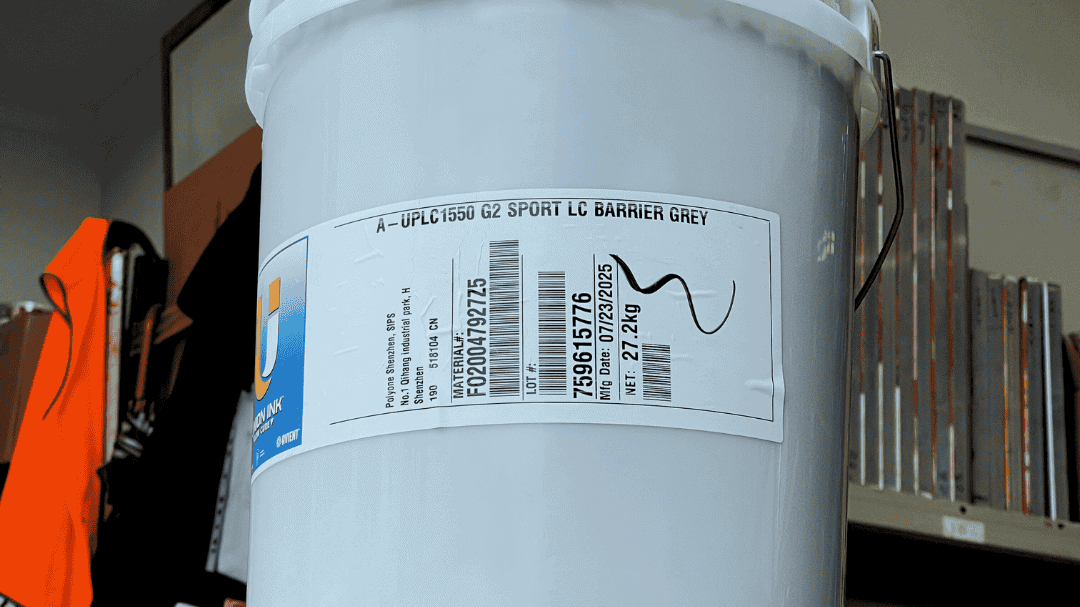
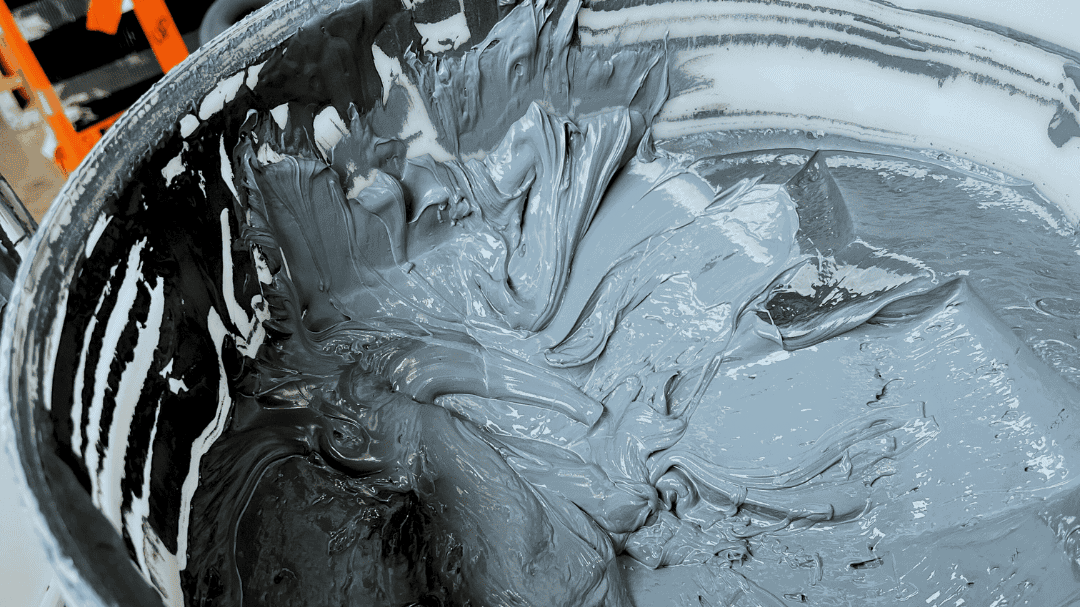
UPLC Grey Barrier Base is specifically designed for this role, offering excellent bleed resistance across a wide temperature range .
Why Hoodie Season Makes This Critical
Hoodies introduce multiple risk factors:
Heavier fabric = more heat required to cure
Polyester blends = higher dye instability
Longer dwell times = increased dye activation
Even low-bleed whites can struggle without a proper barrier layer.
Low cure systems like UPLC are designed to reduce this risk by curing as low as 132°C, helping minimise dye activation while still achieving ink film fusion .
How UPLC Grey Barrier Base Works
From a technical standpoint, UPLC Grey Barrier Base works by:
- Creating a Physical Barrier
A properly deposited ink layer forms a dense film that slows dye penetration.
- Managing Heat Exposure
With a cure range of 132°C–160°C, printers can reduce total thermal stress on the garment .
- Supporting Print Structure
It acts as a stable foundation layer, allowing whites and colours to sit on top without contamination.
Recommended Print Approach (From TDS)
For effective dye blocking:
- Use 34–43 t/cm mesh for adequate ink deposit
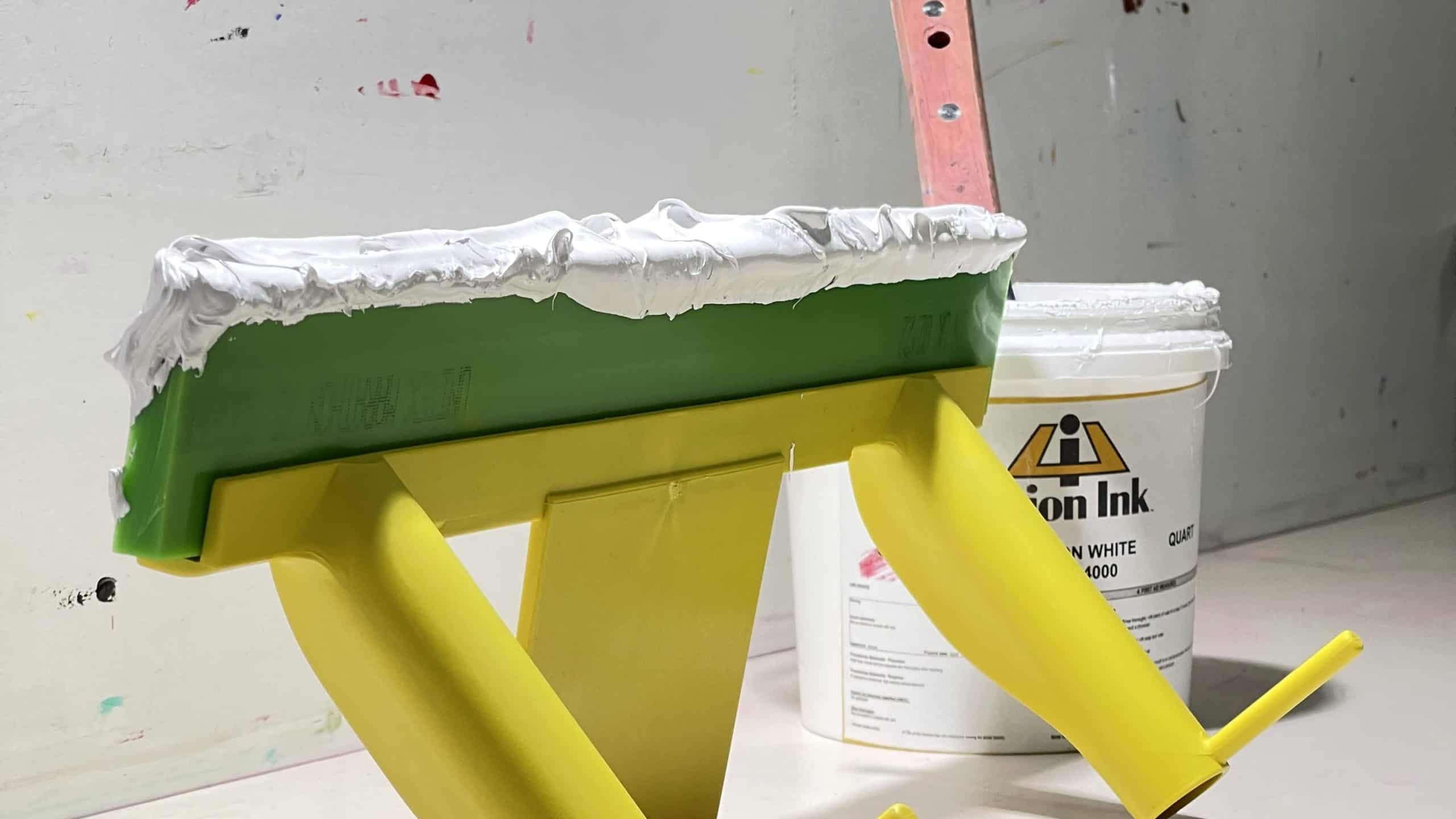
- Print two strokes of barrier base
- Flash until dry to the touch (not over-flashed)
- Print white or colours on top using a print–flash–print sequence
This ensures:
- Proper film build
- Consistent opacity
- Maximum dye blocking performance
Production Considerations
- Pre-shear ink before printing to achieve optimal flow
- Use medium to low squeegee pressure as the ink shears down
- Avoid excessive flash temperatures — overheating can increase dye migration risk
- Cure using a lower temperature + slower belt speed to protect fabric
When You Should Use Barrier Base
You should strongly consider UPLC Grey Barrier Base when printing on:
- 100% polyester
- Poly/cotton blends
- Dye-sublimated garments
- Fabrics with unstable or unknown dye systems
It is especially useful for high-risk designs like camo or sublimated patterns .
Final Thought: This Isn’t an Upsell — It’s Process Control
Barrier base isn’t about adding cost.
It’s about removing risk.
Failed prints, returns, and reprints cost significantly more than implementing the correct underbase system from the start.
If you’re printing hoodies this season, UPLC Grey Barrier Base should be considered a core part of your production workflow—not an optional extra.
Get in touch with us to refine your workflow or to add UPLC Grey Barrier Base into your ink kit.
Written by the Jones Brothers team.